by Richard Baxter DMD, MS | Jul 24, 2015 | Parent Questions, Pediatric Dentistry, Uncategorized
anxious child
A parent asked this question on our Facebook page. If anyone has any questions or suggestions for future blog posts, please post them on our page or in the comments section, and I will be happy to answer them!
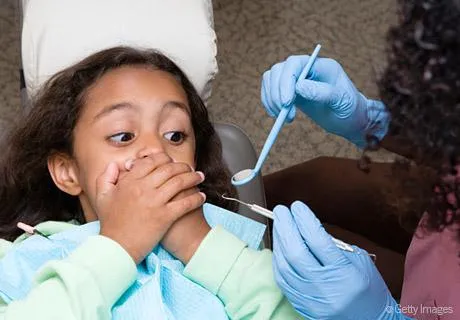
Typically a child who is fearful of the dentist will have had a difficult situation at another dentist’s office or at a pediatrician’s office and is scared of anyone dressed in scrubs or medical clothing. Sometimes the fear is transmitted from a parent or relative who had a bad experience at the dentist. These relatives (often siblings) will say things to the child like “they’re going to pull out a huge needle and jab it into your gums!” Clearly this is the wrong message to send to a child who has never been before or one who is about to get some fillings done. Parents can instead try to prepare their child in a positive way while avoiding the scary things. Say things like “we like the dentist because he / she keeps your teeth healthy” or “you’re going to have a great time because you can watch Frozen while they sing songs to you and fix your teeth!” (Which is true at our office!) You can also show your child our virtual tour on our website so they can see the office before arriving. It’s generally helpful to be vague and allow us to prepare your child for the specific procedure at our office. We allow them to touch the instruments, feel the water and the air, and hear the noises in a non-threatening way while explaining what we are going to do at an age-appropriate level.
Please do not mention anything about “shots”, “drills”, “pulling or yanking teeth” or anything “hurting.” Most of the time (probably 90%), the kids don’t even know they get a teeny tiny injection because we have lots of techniques to help them through the appointment. Many times we take out their sick tooth, and they don’t even know! So prepare them in a way that portrays dentists and dentistry in a positive light, and let us work through the appointment. Although a lot of parents have had difficult experiences at the dentist themselves, and it can be hard to not tell your child about it, avoid discussing your anxiety or past bad experiences. Children can sense a parent’s anxiety. Parents are welcome to accompany children for any visit, but if the parent feels more comfortable waiting in the lobby, that is totally fine too. Also avoid discussing details of a prior difficult experience the child has had at another office. We would be happy to discuss any prior difficulties that you think we need to know about in an area away from the child.
If you have any questions about this post or any others, please call our office at 205-419-7444.
Richard Baxter, DMD, MS
by Richard Baxter DMD, MS | Apr 5, 2015 | Dental Health, Parent Questions, Treatment Options, Uncategorized
FAQ: What are sealants?
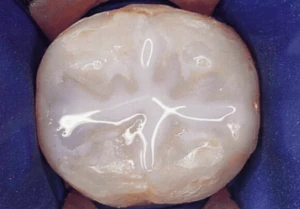
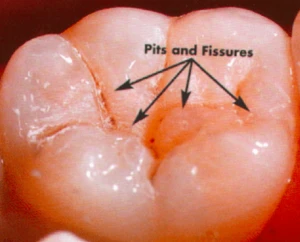
Sealants are a protective coating that can be placed in the deep grooves and pits of permanent molars (and sometimes other teeth). It is a white material that flows into the cleaned enamel, and when the blue light hits the sealant, it is cured and bonded to the tooth surface. Typically sealants can last 5-10 years, but sticky candy (jolly ranchers, laffy taffy, tootsie rolls, etc.) can pull them off, making them ineffective.
Sealants are important because around 42% of children aged 6-19 years have decay in their permanent teeth. Of those, 90% of cavities are found in the pits and fissures of the permanent molars. Sealants can reduce decay in children 86% at one year, 79% at two years, and up to 65% at nine years according to research from the ADA. Since we focus on prevention, we recommend sealants for all permanent molars, and we check the sealants at each visit to make sure they are doing their job of protecting the teeth. They are typically covered well by dental insurance, so they are a great way to protect your child’s teeth.
There was some concern in the past with BPA in dental sealants, and also with fluoride-releasing sealants. In our office, we use Clinpro from 3M ESPE, which contains no fluoride or BPA. Another factor unique to our office is the use of the Isolite system. Sealants placed with even slight moisture can fail quicker and will not protect the teeth as well as sealants placed in a dry field. The Isolite ensures that the child’s saliva is suctioned out during the entire procedure, and even reduces the humidity in the mouth to provide the best bonding and sealant retention possible. We can place the sealants in as little as 10 minutes on all four molars.
by Richard Baxter DMD, MS | Mar 24, 2015 | Dental Health, Parent Questions, Treatment Options, Uncategorized
FAQ: What are the different ways you can fix my child’s cavities?
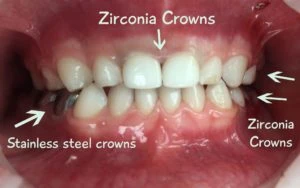
Actual picture of a patient treated by Dr. Baxter.
The treatment we use for children will depend on many different factors and can be quite complex. The two most important factors are the child’s age and their risk of future cavities. The treatment can range from simply monitoring or “watching” a cavity in a small child (or an older child who will lose the tooth soon) to having to do a silver cap in a child who has large decay on the tooth. The treatment of children’s teeth and more importantly, the child that those teeth are attached to, is much different than treatment for adults. We have to take into consideration the child’s psychological development, ability to cooperate in the chair, and their dietary and hygiene habits. In a nutshell, here are the different treatment options.
Monitor or watching a cavity: This is the most conservative route. There are many reasons we may recommend this option depending on the size and number of the cavities, the child’s age, the child’s brushing and flossing habits, and the child’s development.
White fillings: These plastic fillings are very common and are a good restoration to fix children’s teeth. We may recommend these to fix smaller cavities or to fix cavities in the grooves of the teeth. We don’t place any silver fillings (amalgams) because they contain mercury, which can be bad for your child and the environment.
Silver crowns or caps: These crowns are made of stainless steel (no mercury), and when the cavity grows bigger and has broken through to the sides of the tooth, or will require a baby tooth root canal (pulpotomy), then we will do a crown of some type. These silver crowns last longer than white fillings, and we know that the tooth is protected from getting any more cavities. If a child is younger, needs to have treatment in the surgery center, or has decay on many teeth (at a high risk), we may choose to use a crown to prevent further decay.
White crowns: This newer type of crown is made of zirconia and offer an esthetic option for teeth in the front or back of the mouth instead of silver crowns. These may be an option in a child that only needs a few crowns and is able to sit through the treatment (because they take longer to place than the silver ones). They are sometimes more costly than the silver crowns (depending on your insurance), but many parents like these because of their natural look.
Typically, treatment in the office is completed with nitrous oxide or laughing gas. This gas allows the child to relax, and within five minutes of turning it off, it is completely out of their system. Most children respond well to treatment in the office with laughing gas, and we can accomplish treatment that could otherwise not be done without it. It also reduces the gag reflex to increase your child’s comfort and produce the best dentistry possible.
If we are not able to complete treatment with nitrous oxide alone, then we may recommend oral sedation (for just a few teeth). If the child has more extensive dental needs, has had a fearful experience in the past, has special needs, or has lots of anxiety, we may recommend general anesthesia at Children’s Hospital with pediatric anesthesiologists.
With any decision to treat your child, we always weigh several options to individualize the choice to your child (because all children are different) and we strive to treat your child as we would our own. I only recommend treatment that I would do if it were my daughter in that situation, and when there is a choice between two good options, we let the parents know the options and let them decide.
If you have any questions about this post, or any others, please contact Dr. Baxter or the team at 205-419-7444.
by Richard Baxter DMD, MS | Feb 11, 2015 | Dental Health, Parent Questions, Uncategorized
FAQ: Does My Child Need Braces?
Braces Shelby Pediatric Dentistry
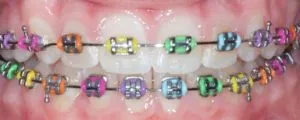
We hear this question daily too! Sometimes, parents ask if their two year old will need braces… and often it is too early to tell. Typically we can spot major problems early (severe crowding, jaw growth problems) around age 4-5. Once the permanent teeth start to erupt, we can see problems more easily. The permanent teeth are almost twice the size of the baby teeth, so if you see no spacing between the baby teeth, you will most likely have problems with too little space, and your child will need braces. The jaw growth in children all happens in the back of the jaw after their baby teeth erupt, so if there is a tooth out of alignment, or one that is “blocked out” and looks like it doesn’t have enough room to fit into line with the other teeth, then your child will likely need to have braces.
The American Association of Orthodontists recommends to get an orthodontic check no later than 7 years of age. Most children don’t need braces until most of their permanent teeth are erupted, around age 12 or 13, but there are some problems like cross bite, jaw growth problems, or severe crowding so that teeth cannot erupt that need to be treated earlier. We will check your child’s orthodontic needs, dental growth and facial development at each check up visit and give you a referral to an orthodontist if your child would benefit from an early check up. The good news is that most first orthodontic visits are at no cost, and your child can have an evaluation with a couple of different orthodontists to make sure you are comfortable with the treatment and with the financial arrangements. The bad news is that (as you know) braces can be really expensive! Thankfully, almost all orthodontists offer payment plans to work with your budget. It’s not a bad idea to start saving early though, especially if you know that your child has some orthodontic problems – like cross bite, they had a thumb sucking habit, or they have severe crowding.
Like always, if you have any concerns about your child’s dental growth or facial development, please call our office at 205-419-7444, or ask us during your dental health visit!