FAQ: What are sealants?

by | Apr 5, 2015

SPD Sealants 2

FAQ: What are sealants?
SPD Sealants SPD Sealants 2

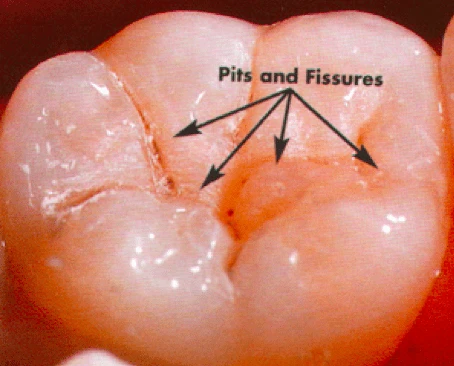
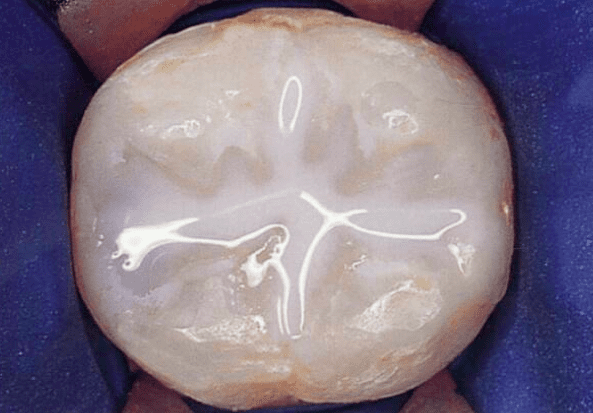
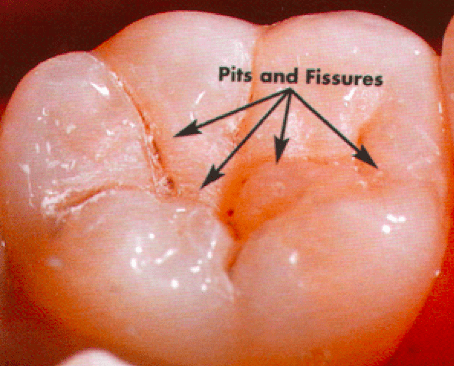
Sealants are a protective coating that can be placed in the deep grooves and pits of permanent molars (and sometimes other teeth). It is a white material that flows into the cleaned enamel, and when the blue light hits the sealant, it is cured and bonded to the tooth surface. Typically sealants can last 5-10 years, but sticky candy (jolly ranchers, laffy taffy, tootsie rolls, etc.) can pull them off, making them ineffective.

Sealants are important because around 42% of children aged 6-19 years have decay in their permanent teeth. Of those, 90% of cavities are found in the pits and fissures of the permanent molars. Sealants can reduce decay in children 86% at one year, 79% at two years, and up to 65% at nine years according to research from the ADA. Since we focus on prevention, we recommend sealants for all permanent molars, and we check the sealants at each visit to make sure they are doing their job of protecting the teeth. They are typically covered well by dental insurance, so they are a great way to protect your child’s teeth.

There was some concern in the past with BPA in dental sealants, and also with fluoride-releasing sealants. In our office, we use Clinpro from 3M ESPE, which contains no fluoride or BPA. Another factor unique to our office is the use of the Isolite system. Sealants placed with even slight moisture can fail quicker and will not protect the teeth as well as sealants placed in a dry field. The Isolite ensures that the child’s saliva is suctioned out during the entire procedure, and even reduces the humidity in the mouth to provide the best bonding and sealant retention possible. We can place the sealants in as little as 10 minutes on all four molars.
Services

Ready to book a visit?

Compassionate care for your child’s healthy smile

Recent Posts

Dental Sealants vs. Fluoride: What’s the Difference?

Dental Sealants vs. Fluoride: What’s the Difference?

Parents often ask me, "Does my child need fluoride, dental sealants, or both?" It's a great question because both treatments are designed to help prevent cavities—but they work in different ways. Rather than choosing one over the other, many children benefit from...

When Is a Child’s Toothache a Dental Emergency?

When Is a Child’s Toothache a Dental Emergency?

A child with a toothache can quickly turn a normal day into a stressful one for the whole family. Some toothaches are caused by minor irritation and can wait for a routine dental appointment. Others may be signs of an infection or another problem that should be...

What Is Pulp Therapy for Children? A Parent’s Guide

What Is Pulp Therapy for Children? A Parent’s Guide

When parents hear the words "pulp therapy," they often become concerned. Some even ask, "Does that mean my child needs a root canal?" While pulp therapy is sometimes called a baby root canal, it's not quite the same procedure adults receive. More importantly, it's...

What Happens at a Dental Visit for an Anxious Child?

What Happens at a Dental Visit for an Anxious Child?

For many parents, the hardest part of a dental appointment isn't the cleaning or the exam-it's worrying about how their child will react. Will they cry? Will they refuse to sit in the chair? Will the appointment be stressful for everyone? If you've been asking...

Digital Dental X-Rays for Children: Are They Safe?

Digital Dental X-Rays for Children: Are They Safe?

As a pediatric dentist, one of the questions I hear most often is: "Does my child really need dental X-rays?" It's a great question-and one every parent should feel comfortable asking. Most parents want to do everything they can to protect their child's health,...