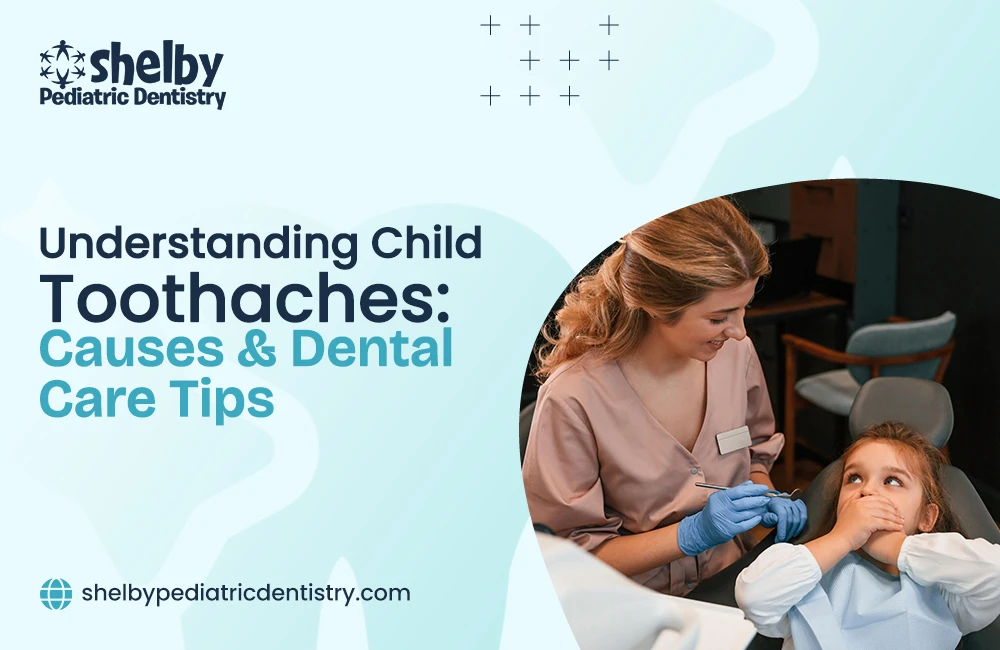
A child with a toothache can quickly turn a normal day into a stressful one for the whole family.
Some toothaches are caused by minor irritation and can wait for a routine dental appointment. Others may be signs of an infection or another problem that should be treated as soon as possible.
So how can you tell the difference?
As a pediatric dentist, one of the most common questions I hear is, “Should I be worried, or can this wait until tomorrow?” The answer depends on your child’s symptoms.
When Is a Child’s Toothache a Dental Emergency?
A child’s toothache may require urgent dental care when caused by infection, injury, or severe pain. Symptoms like swelling, fever, persistent discomfort, or difficulty chewing should be evaluated by a pediatric dentist as soon as possible.
💡 Key Takeaways
Not Every Toothache Is an Emergency
Some toothaches are minor, but ongoing pain should always be checked by a pediatric dentist.
Watch for Warning Signs
Swelling, fever, severe pain, or trouble chewing may indicate a serious dental problem.
Infections Need Quick Care
Untreated tooth infections can spread and cause more discomfort or complications.
Pain That Disrupts Sleep
A toothache that keeps your child awake may require prompt dental evaluation.
Early Treatment Helps
Quick dental care can relieve pain and prevent small problems from becoming serious.
Parents Can Take Action
Gentle cleaning, soft foods, and professional advice can help keep children comfortable.
Why Do Children Get Toothaches?
Toothaches can happen for many different reasons, including:
- Cavities
- A cracked or broken tooth
- Food trapped between the teeth
- Loose baby teeth
- Dental injuries
- Tooth infections
- Erupting permanent teeth
While some causes are minor, others require prompt evaluation to prevent the problem from becoming worse.
Signs a Toothache May Be a Dental Emergency
Although not every toothache is an emergency, there are certain symptoms that should never be ignored.
Call your pediatric dentist promptly if your child has:
- Severe or persistent tooth pain
- Swelling of the gums, face, or jaw
- Pain that keeps them awake at night
- Difficulty chewing because of pain
- A tooth that is broken after an injury
- A fever along with tooth pain
These symptoms may indicate a more serious problem that needs treatment.
If your child is experiencing significant tooth pain or facial swelling, send us a message or call 205-419-7444. We’ll help determine how quickly your child should be seen.
Symptoms Parents Should Never Ignore
One of the biggest concerns with untreated toothaches is infection.
A tooth infection doesn’t always stay confined to the tooth.
Warning signs include:
- Swelling of the face
- Swollen gums
- Pus around the tooth
- Fever
- Difficulty opening the mouth
- Difficulty swallowing
These symptoms should be evaluated as soon as possible.
What Can Parents Do Until the Appointment?
While waiting to see the dentist, you can often help your child feel more comfortable.
You may:
- Gently brush and floss around the painful tooth.
- Rinse with warm salt water if your child is old enough.
- Offer soft foods if chewing is uncomfortable.
- Follow your pediatrician’s or dentist’s recommendations for age-appropriate pain medication if needed.
Avoid placing aspirin directly on the gums, as this can irritate the tissue.
Can a Toothache Mean My Child Has an Infection?
Yes.
One of the most common causes of severe tooth pain is an infection that develops when bacteria reach the inside of the tooth.
Without treatment, the infection may continue to spread and become increasingly painful.
The good news is that early treatment often prevents more serious problems.
If your child has swelling, worsening pain, or signs of infection, don’t wait to see if it improves on its own. Send us a message or call 205-419-7444. We’d be happy to evaluate your child and recommend the appropriate treatment.
Think Your Child Has a Tooth Infection?
Get Fast Pediatric Dental Care for Tooth Pain
Can a Toothache Go Away on Its Own?
Sometimes the pain may improve temporarily, but that doesn’t necessarily mean the underlying problem has resolved.
For example, a cavity or infection may stop hurting for a period of time while continuing to progress.
That’s why persistent tooth pain should always be evaluated, even if your child starts feeling better.
Frequently Asked Questions
Is my child’s toothache an emergency?
Not always. However, severe pain, swelling, fever, or trauma should be evaluated promptly by a pediatric dentist.
What causes severe tooth pain in children?
Common causes include cavities, infections, dental injuries, cracked teeth, or inflammation inside the tooth.
Can a tooth infection spread?
Yes. Untreated dental infections can spread to nearby tissues and become more serious if not treated.
Should I take my child to the dentist immediately?
If your child has severe pain, swelling, or signs of infection, contact your pediatric dentist as soon as possible.
Does swelling mean it’s an emergency?
Swelling around a tooth or in the face often indicates infection and should be evaluated promptly.
When should I worry about a toothache?
If pain lasts more than a day, keeps your child awake, or is accompanied by swelling or fever, it’s time to call your pediatric dentist.
We’re Here When Your Child Needs Us
It’s never easy to see your child in pain, but you don’t have to figure it out alone.
At Shelby Pediatric Dentistry, we’ll help determine whether your child’s toothache requires immediate care and recommend the treatment that’s best for their smile.
If your child has a persistent toothache, swelling, or another dental emergency, send us a message or call 205-419-7444. Early treatment can often relieve discomfort and prevent more serious dental problems.
Does Your Child Have a Toothache or Dental Emergency?