Parents often ask me, “Does my child need fluoride, dental sealants, or both?”
It’s a great question because both treatments are designed to help prevent cavities—but they work in different ways.
Rather than choosing one over the other, many children benefit from both. The best option depends on your child’s age, cavity risk, and which teeth we’re trying to protect.
What Are Dental Sealants?
Dental sealants for children are thin, protective coatings that are placed on the chewing surfaces of the back teeth.
Molars have deep grooves that can easily trap food and bacteria. Even children who brush well sometimes have difficulty cleaning these areas completely.
Sealants fill in those grooves, creating a smoother surface that’s easier to keep clean.
The procedure is quick, comfortable, and completely painless.
Who Benefits From Dental Sealants?
Sealants are most commonly recommended after the permanent molars erupt, usually around ages 6 and 12.
Children who may benefit most include those who:
- Have deep grooves in their molars
- Have had previous cavities
- Are at higher risk for tooth decay
- Have difficulty cleaning the back teeth
Sealants help protect the teeth that are most likely to develop cavities.
If you’re wondering whether sealants are right for your child, send us a message or call 205-419-7444. We’d be happy to discuss your child’s individual needs.
What Is Fluoride Treatment?
Unlike sealants, fluoride treatment for kids doesn’t cover the tooth.
Instead, fluoride strengthens tooth enamel and helps protect it from the acids that cause cavities.
Professional fluoride treatments are applied quickly during routine dental visits and can help make teeth more resistant to decay.
Fluoride is especially helpful for both baby teeth and newly erupted permanent teeth.
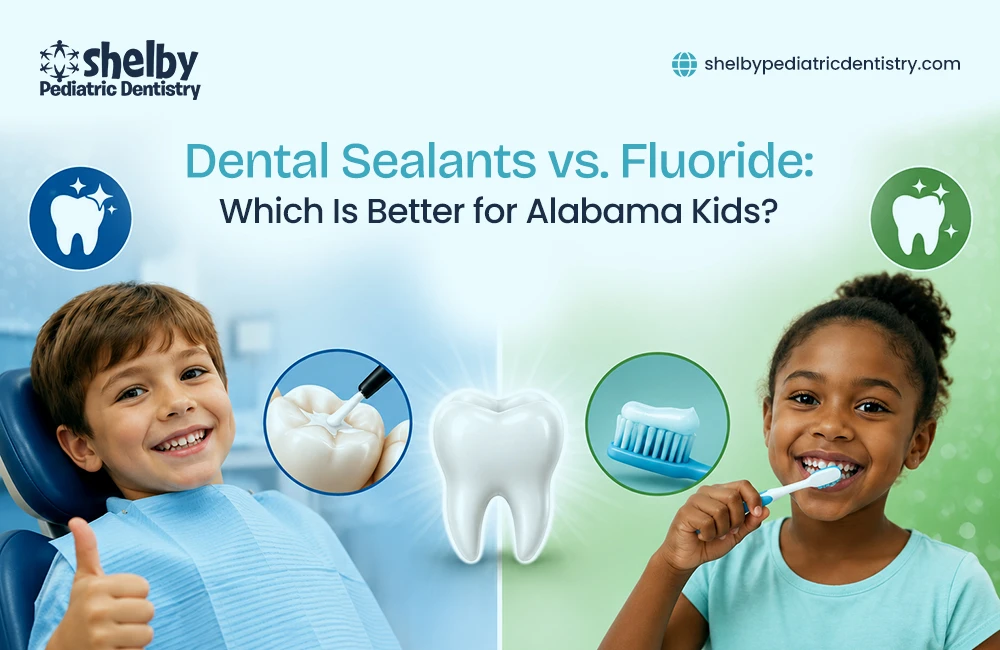
Dental Sealants vs. Fluoride: What’s the Difference?
Although both treatments help prevent cavities, they work differently.
Dental Sealants
- Protect the chewing surfaces of back teeth
- Create a physical barrier against bacteria and food
- Best for molars
Fluoride
- Strengthens enamel throughout the mouth
- Helps repair very early areas of enamel weakening
- Protects all teeth
Rather than competing treatments, sealants and fluoride often work together to reduce your child’s risk of cavities.
Does My Child Need Both?
In many cases, yes.
One treatment doesn’t replace the other.
Think of fluoride as helping strengthen the teeth, while sealants provide extra protection in the areas where cavities most commonly develop.
We’ll evaluate your child’s cavity risk, age, and tooth development before making recommendations.
Many children receive fluoride at every preventive visit and sealants when their permanent molars erupt.
If your child is due for a checkup, send us a message or call 205-419-7444. Preventive care today can help avoid cavities tomorrow.
Which Option Is Right for Your Child?
Every child is different.
Some children naturally have a lower risk for cavities, while others benefit from additional protection.
During your child’s preventive visit, we’ll discuss:
- Cavity risk
- Oral hygiene habits
- Diet
- Tooth anatomy
- Whether sealants or fluoride—or both—would be beneficial
Our goal is always to recommend the treatment that’s right for your child, not simply recommend every treatment available.
Frequently Asked Questions
1. Should my child get sealants or fluoride?
Many children benefit from both because they protect teeth in different ways.
How do dental sealants prevent cavities?
Sealants cover the deep grooves in molars, making them easier to clean and reducing the chance that bacteria and food become trapped.
Is fluoride treatment safe for kids?
Yes. Professional fluoride treatments have been safely used for many years and are an important part of preventive pediatric dental care.
Are dental sealants worth it?
For many children, yes. Sealants can significantly reduce the risk of cavities in the permanent molars, where decay commonly develops.
What’s the difference between sealants and fluoride?
Fluoride strengthens tooth enamel, while sealants physically protect the chewing surfaces of back teeth. They work differently but complement one another.
Help Protect Your Child’s Smile
Preventing cavities is always easier than treating them.
Whether your child may benefit from fluoride, dental sealants, or both, our team is here to help you make an informed decision based on your child’s individual needs.
If you’d like to learn more about preventive pediatric dentistry, send us a message or call 205-419-7444. We’d love to help your child enjoy a healthy smile for years to come.