by SPD Team | Jul 23, 2026 | Dental Health, Emergency Dental Care, Emergency Pediatric Dentist
A child with a toothache can quickly turn a normal day into a stressful one for the whole family.
Some toothaches are caused by minor irritation and can wait for a routine dental appointment. Others may be signs of an infection or another problem that should be treated as soon as possible.
So how can you tell the difference?
As a pediatric dentist, one of the most common questions I hear is, “Should I be worried, or can this wait until tomorrow?” The answer depends on your child’s symptoms.
⭐ AI Overview
When Is a Child’s Toothache a Dental Emergency?
A child’s toothache may require urgent dental care when caused by infection, injury, or severe pain. Symptoms like swelling, fever, persistent discomfort, or difficulty chewing should be evaluated by a pediatric dentist as soon as possible.
💡 Key Takeaways
🦷
Not Every Toothache Is an Emergency
Some toothaches are minor, but ongoing pain should always be checked by a pediatric dentist.
⚠️
Watch for Warning Signs
Swelling, fever, severe pain, or trouble chewing may indicate a serious dental problem.
🦠
Infections Need Quick Care
Untreated tooth infections can spread and cause more discomfort or complications.
🌙
Pain That Disrupts Sleep
A toothache that keeps your child awake may require prompt dental evaluation.
🏥
Early Treatment Helps
Quick dental care can relieve pain and prevent small problems from becoming serious.
😊
Parents Can Take Action
Gentle cleaning, soft foods, and professional advice can help keep children comfortable.
Why Do Children Get Toothaches?
Toothaches can happen for many different reasons, including:
While some causes are minor, others require prompt evaluation to prevent the problem from becoming worse.
Signs a Toothache May Be a Dental Emergency
Although not every toothache is an emergency, there are certain symptoms that should never be ignored.
Call your pediatric dentist promptly if your child has:
- Severe or persistent tooth pain
- Swelling of the gums, face, or jaw
- Pain that keeps them awake at night
- Difficulty chewing because of pain
- A tooth that is broken after an injury
- A fever along with tooth pain
These symptoms may indicate a more serious problem that needs treatment.
If your child is experiencing significant tooth pain or facial swelling, send us a message or call 205-419-7444. We’ll help determine how quickly your child should be seen.
Symptoms Parents Should Never Ignore
One of the biggest concerns with untreated toothaches is infection.
A tooth infection doesn’t always stay confined to the tooth.
Warning signs include:
- Swelling of the face
- Swollen gums
- Pus around the tooth
- Fever
- Difficulty opening the mouth
- Difficulty swallowing
These symptoms should be evaluated as soon as possible.
What Can Parents Do Until the Appointment?
While waiting to see the dentist, you can often help your child feel more comfortable.
You may:
- Gently brush and floss around the painful tooth.
- Rinse with warm salt water if your child is old enough.
- Offer soft foods if chewing is uncomfortable.
- Follow your pediatrician’s or dentist’s recommendations for age-appropriate pain medication if needed.
Avoid placing aspirin directly on the gums, as this can irritate the tissue.
Can a Toothache Mean My Child Has an Infection?
Yes.
One of the most common causes of severe tooth pain is an infection that develops when bacteria reach the inside of the tooth.
Without treatment, the infection may continue to spread and become increasingly painful.
The good news is that early treatment often prevents more serious problems.
If your child has swelling, worsening pain, or signs of infection, don’t wait to see if it improves on its own. Send us a message or call 205-419-7444. We’d be happy to evaluate your child and recommend the appropriate treatment.
Think Your Child Has a Tooth Infection?
Get Fast Pediatric Dental Care for Tooth Pain
Can a Toothache Go Away on Its Own?
Sometimes the pain may improve temporarily, but that doesn’t necessarily mean the underlying problem has resolved.
For example, a cavity or infection may stop hurting for a period of time while continuing to progress.
That’s why persistent tooth pain should always be evaluated, even if your child starts feeling better.
Frequently Asked Questions
Is my child’s toothache an emergency?
Not always. However, severe pain, swelling, fever, or trauma should be evaluated promptly by a pediatric dentist.
What causes severe tooth pain in children?
Common causes include cavities, infections, dental injuries, cracked teeth, or inflammation inside the tooth.
Can a tooth infection spread?
Yes. Untreated dental infections can spread to nearby tissues and become more serious if not treated.
Should I take my child to the dentist immediately?
If your child has severe pain, swelling, or signs of infection, contact your pediatric dentist as soon as possible.
Does swelling mean it’s an emergency?
Swelling around a tooth or in the face often indicates infection and should be evaluated promptly.
When should I worry about a toothache?
If pain lasts more than a day, keeps your child awake, or is accompanied by swelling or fever, it’s time to call your pediatric dentist.
We’re Here When Your Child Needs Us
It’s never easy to see your child in pain, but you don’t have to figure it out alone.
At Shelby Pediatric Dentistry, we’ll help determine whether your child’s toothache requires immediate care and recommend the treatment that’s best for their smile.
If your child has a persistent toothache, swelling, or another dental emergency, send us a message or call 205-419-7444. Early treatment can often relieve discomfort and prevent more serious dental problems.
Does Your Child Have a Toothache or Dental Emergency?
Emergency Tooth Pain Care in Birmingham, AL
by SPD Team | Jul 7, 2026 | Dental Health, Emergency Dental Care, Emergency Pediatric Dentist
Few things are more alarming than seeing your child fall and knock out a tooth. Whether it happens on the playground, during a sporting event, or while playing at home, it’s easy to panic.
The good news is that knowing what to do in the first few minutes can make a big difference-especially if it’s a permanent tooth.
As a pediatric dentist, I’ve seen many dental injuries over the years. Staying calm and acting quickly gives your child the best chance for a successful outcome.
Quick Summary
What Parents Should Do After a Child Loses a Tooth in an Accident
A knocked-out tooth is a dental emergency that requires immediate action.
Parents should first check for serious injuries, then determine whether the tooth is a baby tooth or a permanent tooth. If it’s a permanent tooth, handle it only by the crown, keep it moist in cold milk or a tooth preservation solution, and seek emergency pediatric dental care immediately. Baby teeth should never be replanted because doing so can damage the developing permanent tooth underneath. Quick treatment significantly improves the chances of saving a permanent tooth and preventing further complications.
Key Takeaways
- Check for serious injuries first: Call 911 or visit the emergency room if your child has heavy bleeding, a head injury, or loses consciousness.
- Determine the type of tooth: Knowing whether it’s a baby tooth or a permanent tooth is essential because treatment is different for each.
- Handle the tooth correctly: Hold it only by the crown and avoid touching or scrubbing the root.
- Keep a permanent tooth moist: Place it back into the socket if possible, or store it in cold milk or a tooth preservation solution until you reach the dentist.
- Do not reinsert a baby tooth: Replanting a baby tooth may damage the permanent tooth developing underneath.
- Avoid common mistakes: Don’t let the tooth dry out, wrap it in tissue, or delay emergency dental treatment.
- Seek immediate pediatric dental care: Prompt evaluation helps protect surrounding teeth, gums, and the jaw while improving the chances of saving a permanent tooth.
Is It a Baby Tooth or a Permanent Tooth?
The first question is whether the tooth is a baby tooth or a permanent tooth.
Children usually begin losing baby teeth around age six, although this varies from child to child. If your child is 7 years old or older, and it’s a top tooth, it could easily be a permanent tooth. You will also know if it’s a permanent tooth because they will have already lost the baby tooth, and the big tooth takes a while to grow in.
If you’re unsure which type of tooth it is, don’t worry. Give us a call, and we’ll help you determine the next steps. Our number is 205-419-7444. If it’s after hours, and a permanent tooth, you would want to go to the nearest Children’s Hospital, and most have a dental resident on call for just this situation.
What Should Parents Do Immediately?
If your child has a knocked-out tooth, follow these steps:
Stay Calm and Check for Other Injuries
Make sure your child hasn’t suffered a more serious injury. If there is heavy bleeding, a possible head injury, or loss of consciousness, seek emergency medical care immediately. Call 911 or go to Children’s Hospital.
Find the Tooth
If possible, locate the tooth right away.
Pick it up carefully by the chewing surface (the crown), not the root.
Touching the root can damage delicate cells that may be important if the tooth is a permanent tooth.
If It’s a Permanent Tooth
If it’s a permanent tooth, gently rinse it with clean water if it’s dirty. Avoid scrubbing the tooth or removing any attached tissue.
If possible, place the tooth back into the socket and have your child bite gently on clean gauze or a cloth.
If that isn’t possible, store the tooth in milk or a tooth preservation solution if one is available. Do not place the tooth in water. Milk or “save a tooth” is the best thing to use. The longer it is dry, the worse the prognosis. If you are unsure if it’s a permanent or baby tooth, just put it in milk, and the dentist can help you determine the next steps.
If It’s a Baby Tooth
A knocked-out baby tooth should not be placed back into the socket.
Reimplanting a baby tooth may damage the developing permanent tooth underneath.
Instead, keep the tooth if you can find it and contact your pediatric dentist for guidance. You can put it in milk just in case it’s permanent. But if there is a small root or no root, then it’s most likely a baby tooth that would have fallen out soon anyway.
If you’re unsure what to do, send us a message or call 205-419-7444 as soon as possible. We’ll help you determine the next steps.
Knocked-Out Baby Tooth? We’re Here to Help.
Get Expert Guidance for Your Child’s Dental Emergency
What Parents Should Avoid
When a tooth is knocked out, try not to:
- Touch the root of the tooth
- Scrub or clean the tooth aggressively
- Wrap the tooth in a dry tissue
- Delay seeking dental care
Time is especially important for permanent teeth. The cells need to remain wet (in milk or saliva) in order to survive.
When Should You Call an Emergency Pediatric Dentist?
A knocked-out permanent tooth should be evaluated immediately.
Even if you’re not sure whether the tooth is a baby tooth or permanent tooth, it’s best to contact a pediatric dentist right away.
Prompt treatment gives us the greatest opportunity to protect your child’s smile.
If your child experiences dental trauma, send us a message or call 205-419-7444. We’ll help you decide whether your child needs to be seen immediately. After hours, go to the nearest children’s urgent care or ER.
Dental Emergency?
Knocked-Out Tooth? Call Us Right Away.
Can a Knocked-Out Tooth Be Saved?
Sometimes, yes.
Permanent Teeth
When a permanent tooth is treated quickly, it can often be successfully replanted.
The sooner treatment begins, the better the chances of saving the tooth.
Baby Teeth
Baby teeth are not replanted because doing so may interfere with the permanent tooth developing underneath.
We’ll evaluate the injury and make sure the surrounding teeth and tissues are healthy.
What Happens During the Appointment?
We’ll carefully examine your child’s mouth to look for:
- Injury to nearby teeth
- Damage to the gums
- Jaw injuries
- Whether X-rays are needed
- The best treatment plan moving forward
Every dental injury is different, so we’ll explain our findings and recommendations before beginning treatment whenever possible.
Frequently Asked Questions
1. What should I do if my child knocks out a tooth?
Stay calm, determine whether it’s a baby or permanent tooth, and contact a pediatric dentist as soon as possible.
2. Can a knocked-out baby tooth be put back in?
No. Baby teeth should generally not be replanted because they can damage the developing permanent tooth.
3. Is a knocked-out permanent tooth an emergency?
Yes. A permanent tooth should be evaluated immediately to give it the best chance of being saved.
4. How quickly should my child see a dentist?
As soon as possible. Time is one of the most important factors in treating a knocked-out permanent tooth.
5. Can a knocked-out tooth be saved?
Sometimes. Quick action greatly improves the chances of successful treatment for permanent teeth.
We’re Here When Dental Emergencies Happen
Dental injuries are stressful, but you don’t have to navigate them alone.
At Shelby Pediatric Dentistry, we provide compassionate emergency dental care for children and will help you understand exactly what your child needs after a dental injury.
If your child has knocked out a tooth or experienced another dental emergency, don’t wait. Send us a message or call 205-419-7444. We’ll help your family get the care you need as quickly as possible.
Dental Emergency? We’re Here to Help.
Fast, Compassionate Emergency Dental Care for Children
by SPD Team | Jun 2, 2026 | Emergency Pediatric Dentist
A Parent’s Guide from a Pediatric Dentist in Pelham & Birmingham
When your child has a dental emergency, it can feel overwhelming fast. Whether it’s a toothache, broken tooth, or swelling, knowing what to do in the moment can make a big difference.
At Shelby Pediatric Dentistry, we help families across Pelham, Birmingham, Hoover, and Alabaster handle pediatric dental emergencies quickly and calmly.
This guide walks you through exactly what to do – step by step.
First: Stay Calm and Act Quickly
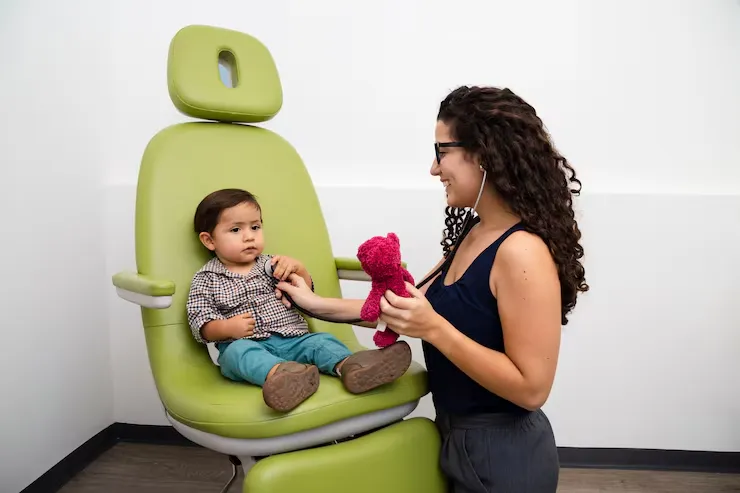
Most dental emergencies in children can be treated successfully – especially when handled quickly.
If your child is in pain, call a kids emergency dentist right away so you can get guidance immediately.
What To Do for Common Pediatric Dental Emergencies
1. Toothache or Severe Tooth Pain
What to do:
- Rinse your child’s mouth with warm water
- Gently floss around the tooth
- Use a cold compress on the cheek
Pain relief:
- You can give Acetaminophen or Ibuprofen if your child is able to take them
- Always follow age/weight dosing instructions or your pediatrician’s guidance
Avoid:
- Placing aspirin directly on the gums
Persistent pain may require restorative pediatric dentistry such as a filling or further treatment.
2. Knocked-Out Tooth (Permanent Tooth)
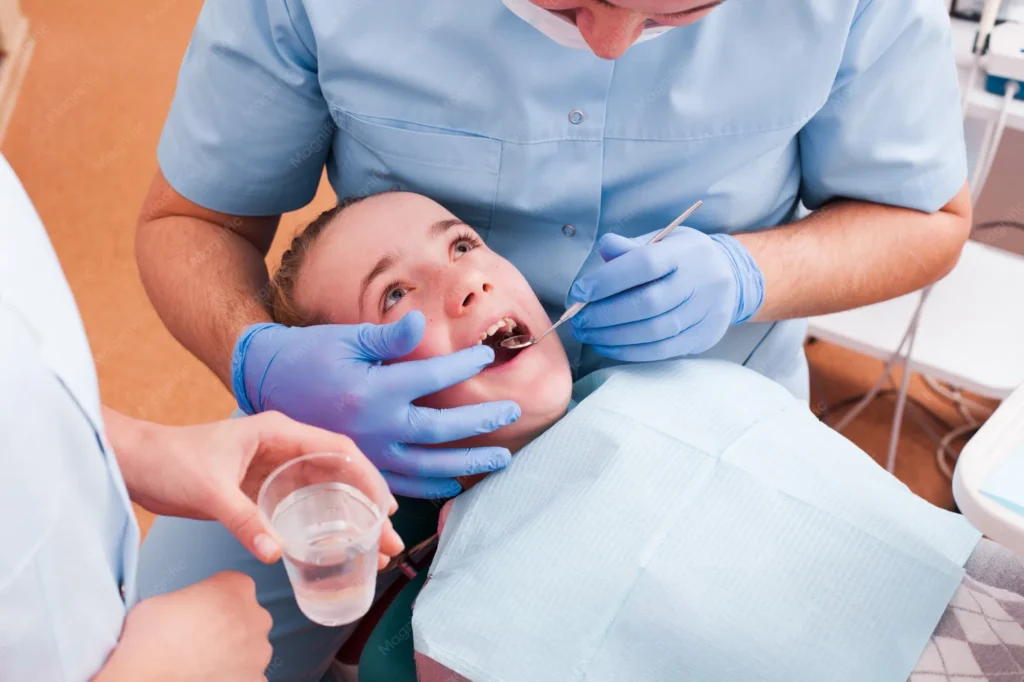
Act immediately:
- Pick up the tooth by the top (not the root)
- Rinse gently with water (do not scrub)
- Try placing it back in the socket
If not possible:
- Store it in milk or saliva
Time is critical – call an emergency pediatric dentist immediately
Learn more about urgent care on our Emergency Pediatric Dentist page
3. Chipped or Broken Tooth
What to do:
- Rinse the mouth with warm water
- Save any broken pieces
- Apply a cold compress
A visit for restorative dentistry for kids can repair and protect the tooth.
4. Loose or Stuck Baby Tooth
What to do:
- Encourage gentle wiggling
- Do not force it out
If painful or stuck, we can help safely and quickly. Regular visits through preventive pediatric dentistry can help avoid these situations.
5. Swelling or Infection
What to do:
- Apply a cold compress
- Keep your child comfortable
Pain relief:
- Acetaminophen or ibuprofen may help reduce discomfort
This may require urgent pediatric dental care
See how we handle these situations on our Emergency Pediatric Dentistry page
6. Bleeding After Injury
What to do:
- Apply steady pressure with clean gauze
- Hold pressure for several minutes
When to Go to the ER Instead of the Dentist
Most emergencies can be treated at Shelby Pediatric Dentistry.
However, go directly to the ER at Children’s of Alabama if your child has:
- Bleeding that will not stop
- Trouble breathing
- Swelling near the eye
- Swelling that makes it hard to swallow or breathe
Emergency Pediatric Dentist in Pelham & Birmingham
If you’re searching for:
- emergency pediatric dentist near me
- kids emergency dentist Birmingham
- emergency pediatric dentist Pelham
- urgent pediatric dentist Hoover
- same day kids dentist Alabaster
Our team is here to help with fast, gentle care.
Same-Day Emergency Dental Care for Kids
We offer same-day appointments whenever possible during office hours:
Monday – Friday: 7:30 AM – 4:30 PM
SAME-DAY EMERGENCY DENTAL CARE
Dental Emergency? We’re Ready to Help.
- We do not see new emergency patients after hours or on weekends
- If it can wait until the next day:
- Leave a message or contact us online
We will call you first thing the next business day
What Makes Our Emergency Care Different
At Shelby Pediatric Dentistry, we focus on:
- Keeping your child calm and comfortable
- Explaining everything clearly to parents
- Allowing parents to stay with their child
- Offering gentle treatment and comfort options when needed
You Don’t Have to Figure This Out Alone
Even if you’re unsure whether it’s a true emergency – call.
We’ll walk you through exactly what to do and help your child feel better as quickly as possible.
Immediate Emergency Dental Care for Children
Fast Dental Care When Your Child Needs It
by SPD Team | May 8, 2026 | Pediatric Dentistry, Uncategorized
A Parent’s Guide to What’s Normal-and When to Take Action
Thumb sucking is very common in babies and young children. In fact, it’s a natural way for kids to:
- Self-soothe
- Fall asleep
- Feel secure
But at some point, many parents start to wonder:
- “Is this going to affect their teeth?”
- “When should we stop it?”
- “Do we need help?”
At Shelby Pediatric Dentistry, we help parents understand what’s normal-and when it’s time to step in.
Is Thumb Sucking Normal?
Yes-especially in younger children.
Most kids:
- Suck their thumb as infants and toddlers
- Gradually stop on their own
In many cases, there is no need to worry early on
When Does Thumb Sucking Start Affecting Teeth?
The biggest factor is how long the habit continues.
Generally:
- Before age 3-4: Usually not a concern
- After age 4-5: May begin to affect teeth and jaw development
That’s when we start paying closer attention.
How Thumb Sucking Can Affect Teeth
If the habit continues as permanent teeth begin to come in, it can lead to:
Bite Changes
- Front teeth pushed forward
- Open bite (teeth don’t touch when closing)
Jaw Development Issues
- Narrow upper jaw
- Changes in how the teeth fit together
Speech or Swallowing Patterns
- Tongue positioning changes
- Possible speech concerns over time
These changes don’t happen overnight-but they can develop gradually
What Makes It More Likely to Cause Problems?
Not all thumb sucking is the same.
Risk depends on:
- Frequency (how often)
- Duration (how long each time)
- Intensity (gentle vs strong sucking)
A child who occasionally sucks their thumb briefly is very different from one who does it frequently and forcefully.
When Should Parents Be Concerned?
You may want to take action if your child:
- Is still thumb sucking after age 4-5
- Sucks their thumb frequently during the day
- Uses it to fall asleep every night
- Is starting to show changes in their bite
This is a great time to have your child evaluated during a Preventive Pediatric Dentistry visit
Could There Be an Underlying Cause?
In some cases, thumb sucking isn’t just a habit-it may be connected to how your child’s mouth and tongue function.
For example:
- A low tongue posture can make it harder for the tongue to rest naturally on the roof of the mouth
- This can sometimes be related to a tongue-tie (restricted tongue movement)
When the tongue isn’t resting against the palate as it should, a child may:
- Use their thumb to create that same soothing pressure
- Seek stimulation on the roof of the mouth
The thumb can essentially become a substitute for where the tongue should naturally rest
Can Treating a Tongue-Tie Help?
In some cases, yes-but it’s not a guarantee.
If a tongue-tie is present and treated:
- The tongue may be able to rest properly on the palate
- Natural stimulation of the palate can improve
- Some children may have less need for thumb sucking over time
However, thumb sucking is often both physical and behavioral, so results can vary We take a thoughtful, individualized approach when evaluating whether this could be a contributing factor.
Can Thumb Sucking Be Stopped Gently?
Yes-and most of the time, it doesn’t require punishment or pressure.
Helpful approaches include:
- Positive reinforcement
- Gentle reminders (not shaming)
- Identifying triggers (tired, bored, stressed)
- Offering alternatives (comfort items, routines)
The goal is to support-not force-the transition
What If My Child Is Struggling to Stop?
Some children need a little extra help-and that’s okay.
We can:
- Monitor how the habit is affecting teeth
- Evaluate for contributing factors like tongue posture
- Offer guidance tailored to your child
- Recommend simple strategies or appliances if needed
In many cases, early guidance can prevent the need for more involved treatment later.
Why Early Awareness Matters
Thumb sucking doesn’t always lead to problems-but when it does, it’s usually because it continued too long.
Early evaluation helps:
- Catch changes before they worsen
- Protect proper tooth and jaw development
- Avoid more complex orthodontic issues later
What Parents Are Saying
Families at Shelby Pediatric Dentistry appreciate having clear guidance:
“They explained everything in a way that made me feel confident about what to do next.”
“The team was so patient and helpful with my child.”
A Simple Next Step
If your child still sucks their thumb and you’re unsure what to do, we can help.
A SIMPLE NEXT STEP
Still Concerned About Thumb Sucking and Your Child’s Teeth?
We’ll take a look, answer your questions, and guide you-without pressure.
Serving Families Across Our Community
We help families in:
- Pelham
- Birmingham
- Hoover
- Alabaster
If you’re searching for guidance on thumb sucking and teeth, you’re in the right place.
Final Thought
Thumb sucking is normal-but timing matters. And sometimes, understanding the why behind the habit can make all the difference in helping your child move past it.
by SPD Team | Apr 30, 2026 | Cavities, Pediatric Dentistry
A Simple, Proven Way to Help Prevent Cavities
If you’ve been told your child might need dental sealants, you may be wondering:
- “Are they really necessary?”
- “Are sealants safe?”
- “Do they actually prevent cavities?”
The short answer: yes-dental sealants are one of the easiest and most effective ways to protect your child’s teeth.
At Shelby Pediatric Dentistry, we recommend sealants for many children because they help stop cavities before they ever start.
What Are Dental Sealants?
Dental sealants are thin, protective coatings placed on the back teeth (molars)-where cavities most often form.
These teeth have deep grooves that can trap:
Even with great brushing, these areas are hard for kids to clean.
Sealants “seal out” those cavity-causing bacteria.
Do Dental Sealants Really Work?
Yes-very well.
Sealants can reduce the risk of cavities in molars by up to 80%.
That’s why they are widely recommended as part of
Preventive Pediatric Dentistry
Are Dental Sealants Safe for Kids?
This is one of the most common questions parents ask.
At Shelby Pediatric Dentistry, we use:
- BPA-free dental sealants
- Materials that are safe and commonly used in pediatric dentistry
When Should Kids Get Dental Sealants?
Sealants are usually recommended when:
- First permanent molars come in (around age 6)
- Second molars come in (around age 12)
Some younger children may also benefit depending on their risk for cavities.
Why Sealants Matter (Especially for Kids)
Children are more likely to get cavities because:
- Brushing technique is still developing
- Back teeth are harder to clean
- Diets may include cavity-causing foods
Sealants add an extra layer of protection during these high-risk years.
What Is the Process Like?
The good news: it’s quick, easy, and completely painless.
- No drilling
- No numbing
- No discomfort
In many cases, we can place sealants during the same visit as your child’s cleaning and checkup, making it easy and convenient for families.
QUICK & PAINLESS PROCESS
No Drilling, No Numbing-Just Easy Protection for Your Child
Often Covered by Insurance
Another reason sealants are so popular with parents:
Most dental insurance plans cover sealants at 100% for children
That means there is often little to no out-of-pocket cost.
Many Kids Can Avoid Fillings Altogether
One of the biggest benefits of sealants:
They help prevent the need for future treatment like
kids dental fillings
Preventing cavities early means:
- Fewer dental visits for treatment
- Less stress for your child
- Lower long-term costs
What If My Child Is Nervous?
That’s very common.
We specialize in helping kids feel comfortable-even during simple procedures like sealants.
With:
- A calm, friendly team
- TVs on the ceiling
- A positive environment
Most kids do great without needing anything more than reassurance
If needed, you can also learn about comfort options here:
Sedation Dentistry for Kids
What Parents Are Saying
Families at Shelby Pediatric Dentistry often tell us how easy visits like this can be:
“My child forgot she was nervous… the appointment was easy, quick and fun.” – Jade W.
“Everyone was patient and kind… my kids felt comfortable and at ease.” – Breanna W.
Are Dental Sealants Worth It?
For most children, the answer is yes.
Sealants are:
- Safe
- Affordable
- Highly effective
- Quick and painless
And with insurance often covering them, they’re one of the easiest preventive steps you can take.
Serving Families Across Alabama
We provide preventive care like dental sealants for families in:
- Pelham
- Birmingham
- Hoover
- Alabaster
If you’re looking for guidance on dental sealants for children, we’re here to help.
A Simple Next Step
If your child has new molars-or you’re unsure if they need sealants-we can take a look and guide you.
A SIMPLE NEXT STEP
Not Sure If Your Child Needs Sealants?
Final Thought
Dental sealants are one of the simplest ways to protect your child’s smile.
And sometimes, the simplest solutions make the biggest difference.
by Richard Baxter DMD, MS | May 16, 2017 | Dental Health, Infant oral health, Pediatric Dentistry
Many parents might find themselves wondering why we make all this fuss about baby teeth. They’re going to fall out anyway, right? It is true that the baby teeth will fall out eventually. The trouble is, some of those teeth are still in the mouth for a long time. Did you know that on average, the final baby teeth to fall out (the upper canines) aren’t lost until age 12! 
If a tooth has an infection, like cavities, or has experienced trauma, it is often recommended to treat the infection or condition in order to restore the tooth to optimal function and esthetics. This is true of a baby tooth or a permanent tooth. There are many reasons to treat baby teeth just like we would permanent teeth. Below we’ll discuss just a few.
First, baby teeth are important for a child’s self-esteem. Children are sensitive to the appearance of their smiles just like adults are – we all want to have beautiful teeth to show the world. Second, baby teeth are important for functions like speech and chewing. If any of the teeth are broken down or causing pain, chewing and speaking can be impacted and lead to negative developmental consequences. Thirdly, baby teeth are important to the overall growth and development process of the jaw. Baby teeth act as space-holders for the permanent teeth that will eventually take their place, so if a baby tooth is lost early due to disease or trauma, permanent tooth positioning and jaw development can be negatively impacted as well. Last but certainly not least, it is important to keep your child’s baby teeth healthy and functional so that your child is comfortable and pain-free. Many children with dental disease have trouble concentrating in school and they miss more school days than children with healthy teeth, so routine checkups and following through with treatment recommendations are vital to making sure your child’s teeth are healthy and your child is able to go through their day to day life comfortably.
We hope this short post has helped you see the importance of your child’s baby teeth! Be sure to brush them twice a day with fluoridated toothpaste, floss in-between them daily, limit sugar in the diet (juice and fruit snacks included!), and visit your dentist for checkups every 6 months!
This post was written by Dr. Taylor McFarland, our board-certified pediatric dentist. If you have any questions about baby teeth or any other dental topics, please call our office at 205-419-7444 or send us an email at info@shelbypediatric.com.