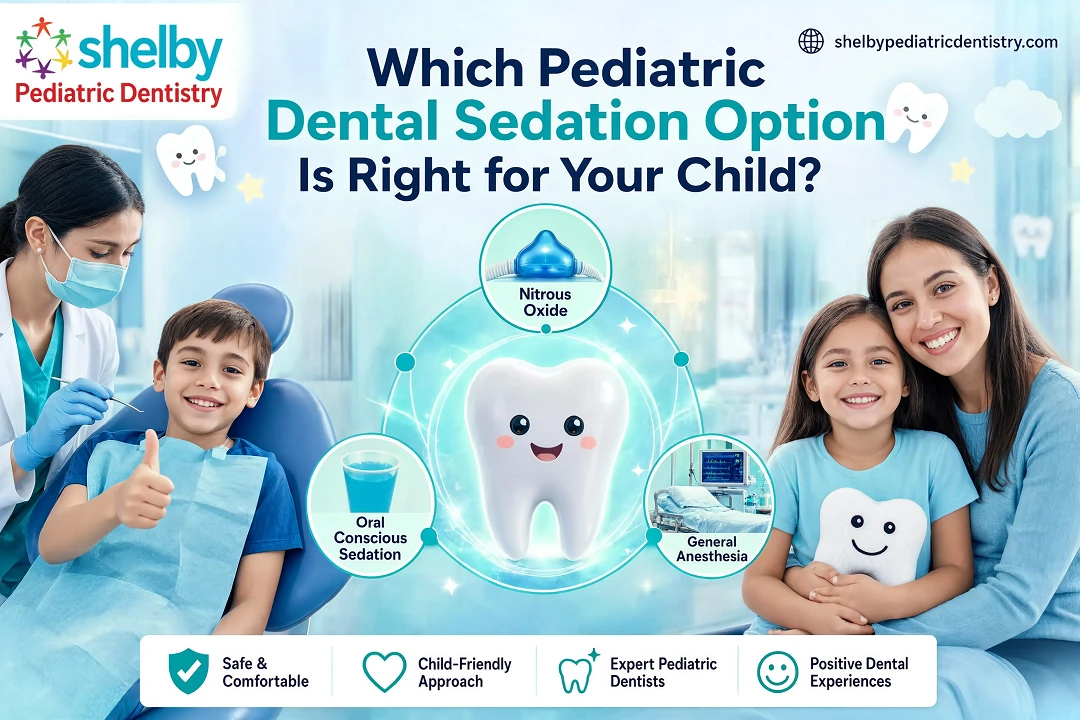
The right pediatric dental sedation option depends on your child’s age, anxiety level, medical history,
Most children only require little or no sedation, while others may benefit from nitrous oxide (laughing gas), oral sedation, IV sedation, or general anesthesia.
Your pediatric dentist will recommend the safest and most appropriate option for your child’s individual needs.
Pediatric dental sedation is the use of safe medications and techniques that help children stay calm, comfortable, and relaxed during dental treatment while maintaining their safety.
This guide is for parents whose children may need dental sedation for an upcoming dental procedure. Read it to understand which sedation option may be recommended and when each method is used.
💡 Key Takeaways
Sedation Is Personalized
Your child’s age, health, anxiety level, and dental treatment determine which sedation option is most appropriate.
Laughing Gas for Mild Anxiety
Nitrous oxide helps children relax while staying awake and typically wears off within minutes after treatment.
Oral Sedation Offers Deeper Relaxation
Oral sedation helps children feel calm while remaining able to breathe independently and respond during treatment.
IV Sedation for Complex Care
Children needing extensive dental treatment or experiencing severe anxiety may benefit from IV sedation supervised by a pediatric anesthesiologist.
General Anesthesia When Needed
General anesthesia may be recommended for very young children, special healthcare needs, or complex dental procedures.
Safety Comes First
Pediatric dental sedation has an excellent safety record when performed by trained professionals using proper monitoring and safety guidelines.
Why Is Sedation Used in Pediatric Dentistry?
Many children do wonderfully with routine dental care and gentle behavior guidance.
However, sedation can be helpful for children who:
- Have significant dental anxiety
- Need extensive dental treatment
- Are very young and unable to cooperate safely
- Have special healthcare needs
- Have a strong gag reflex
The goal isn’t simply to help children relax. It’s to provide dental care safely while creating the most positive experience possible.
If you have questions about sedation, send us a message or call 205-419-7444. We’d be happy to discuss your child’s treatment options.
Nitrous Oxide (Laughing Gas)
For many children, nitrous oxide, commonly called laughing gas, is all that’s needed.
Nitrous oxide helps children relax while remaining fully awake and able to communicate throughout the appointment.
Some of the benefits include:
- Quick onset
- Wears off within minutes
- Children remain awake
- No needles
- Most children return to normal activities immediately afterward
This is often an excellent option for children who are mildly nervous but otherwise able to cooperate.
Oral Sedation
Some children need a little more help than laughing gas alone can provide.
For these patients, we may recommend oral sedation using medications such as Versed (midazolam) and hydroxyzine.
Oral sedation helps children feel significantly more relaxed while still breathing on their own and responding appropriately during treatment.
Many parents tell us they’re surprised by how much easier the appointment was than they expected.
IV Sedation
For children requiring extensive treatment or who cannot comfortably receive care with lighter forms of sedation, we offer IV sedation in our office.
During IV sedation:
- Your child is completely asleep.
- A board-certified pediatric anesthesiologist is present throughout the procedure.
- The anesthesiologist focuses entirely on your child’s anesthesia and safety while I focus on your child’s dental treatment.
Having a dedicated pediatric anesthesiologist provides an additional level of expertise and allows treatment to be completed comfortably in one visit.
If your child has extensive treatment needs or significant dental anxiety, send us a message or call 205-419-7444. We’d be happy to explain whether IV sedation is appropriate.
General Anesthesia
Occasionally, the safest option is completing treatment under general anesthesia at an outpatient surgery center or at Children’s of Alabama.
This may be recommended for:
- Very young children needing extensive treatment
- Children with significant special healthcare needs
- Children whose treatment cannot be safely completed in the office
We’ll explain why we believe this option is appropriate and answer all of your questions before scheduling treatment.
How Do We Decide Which Option Is Best?
Every child is different.
When making recommendations, we consider:
- Your child’s age
- Medical history
- Level of anxiety
- Ability to cooperate
- The amount of dental treatment needed
- Overall health
Many children need no sedation at all. Others do very well with laughing gas. Some benefit from oral sedation, while a smaller number require IV sedation or general anesthesia.
Our philosophy is simple: recommend the safest option that allows your child to receive excellent dental care comfortably.
Is Pediatric Dental Sedation Safe?
Parents naturally want reassurance that sedation is safe.
When appropriate safety guidelines are followed and sedation is provided by trained professionals, pediatric dental sedation has an excellent safety record.
Before recommending sedation, we’ll carefully review your child’s medical history, discuss medications, explain what to expect, and answer every question you have.
Your child’s safety is always our highest priority.
Frequently Asked Questions
1. What sedation options are available for children?
At Shelby Pediatric Dentistry, we offer nitrous oxide (laughing gas), oral sedation, IV sedation with a board-certified pediatric anesthesiologist, and general anesthesia when appropriate.
2. What is the difference between laughing gas and oral sedation?
Laughing gas helps children relax while remaining fully awake and wears off quickly. Oral sedation provides a deeper level of relaxation for children who need additional support.
3. Which sedation option is best for my child?
That depends on your child’s age, anxiety level, medical history, and treatment needs. We’ll recommend the option that’s safest and most appropriate.
4. Is laughing gas safe for children?
Yes. Nitrous oxide has been safely used in pediatric dentistry for many years and is one of the most common sedation options for mildly anxious children.
5. Can my child return to normal activities afterward?
Children who receive laughing gas usually return to normal activities immediately. Recovery after oral sedation, IV sedation, or general anesthesia varies, and we’ll provide detailed instructions before your appointment.
We’re Here to Help Your Child Feel Comfortable
Choosing sedation for your child is an important decision, and we’re here to guide you every step of the way.
Whether your child needs no sedation at all, laughing gas, oral sedation, IV sedation, or general anesthesia, we’ll recommend the approach that’s safest, most comfortable, and best suited to your child’s individual needs.
If you’d like to learn more about our pediatric dental sedation options, send us a message or call 205-419-7444. We’d be honored to care for your child and help make every dental visit as positive as possible.
Stress-Free Dental Visits Start Here
Discover safe, gentle sedation options designed to keep your child comfortable during dental treatment.