We are doing some “Tooth Tips” for 89.9 WAY-FM (the best Christian radio station in Birmingham) and we wanted to share them with you. We will be releasing the three one-minute spots over the next couple of weeks. This radio station plays the best Christian music, with the least commercials. Dr. Baxter also had a chance to meet all of the DJs on his trip to Ghana in January (purely by coincidence) when they were on the same flights to Amsterdam and Accra, Ghana for a trip with Compassion International.
We hope you enjoy the first tip on sugar. Click below to play.
Here’s the transcript:
This is Dr. Richard Baxter from Shelby Pediatric Dentistry with a few tips about children’s oral health. Be careful with the amount of sugar in your child’s diet. Sugar can sneak in through obvious ways like candy and sugary drinks. But be careful with fruit juice because most fruit juices, even no sugar added apple juice contain more sugar than most soft drinks. In addition, frequency is more important than the amount of sugar consumed. For example if your child eats fruit snacks or drinks juice in small amounts throughout the day, that is worse for their teeth than having dessert with dinner or having juice with lunch. We recommend drinking water throughout the day, and white milk with meals. This will keep the time that the teeth are touching sugar to a minimum. We hope these tips can help you and your child stay cavity free! More oral health tips are on our website at ShelbyPediatricDentistry.com. And our office number is 419-7444.
Tooth Tips are made possible by Shelby Pediatric Dentistry, a business impact partner with WAY-FM.
Please let us know if you have any questions about sugar in your child’s diet. Our number is 205-419-7444.
This is going to sound crazy, but eating Halloween candy on Halloween is not dangerous for your teeth. The bigger concern is when the candy is eaten frequently throughout the year and becomes a habit. For example, it’s much better for your child’s teeth to allow them to eat whatever candy they want on Halloween night, and then get rid of the rest. For example, if they receive 100 pieces of candy, and you give them one piece a day, it may create a habit of wanting candy every day – which is much more likely to cause cavities. So the best thing for parents to do with Halloween candy is to let their child enjoy it on Halloween night, and get rid of the rest however you choose to do so.
Some offices offer a “Candy Buy-back” program. We do not have a candy buyback program at our office at this time. We know it can be helpful in some ways, but the main reason we don’t do it is because we don’t want to shift the problems associated with candy from your kids to someone else. Unfortunately, the homeless commonly have many health problems and tooth decay already. According to one of our employees whose husband served several tours in Iraq, the troops have limited access to dental care and the candy is often melted by the time it gets to them. She suggested sending troops sunflower seeds, beef jerky, or energy bars instead. If we could find something useful to do with the candy, we may have one in the future, but for now, the best thing I can think to do with it is to have a massive bonfire! (Just kidding… well, sort of).
The best dental procedures to protect a child’s teeth from candy are dental sealants. These protective coatings “seal” the grooves so the candy does not get stuck deep in the molar where it is difficult to clean. However, sticky candy like Jolly Ranchers, Tootsie Rolls, caramels, and taffy can actually pull the sealants off, or pull off crowns or other dental work, so be careful!
Be safe when Trick or Treating, by all means enjoy the holiday, but don’t keep the candy around a long time!
If you have any other questions about this post, or about dental health in general, please leave a comment or call our office at 205-419-7444.
Flossing is a key part of maintaining a healthy mouth and a beautiful smile. But let’s be honest, flossing is not very high on the to-do list. Sometimes, it takes so much effort to get your child’s teeth brushed at night, that adding flossing would be just too much. So here’s a tip: Only floss your child’s teeth that are touching.
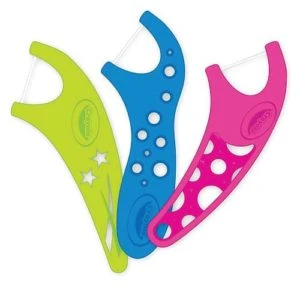
If your child’s teeth are not touching, you don’t have to floss. Make sure to brush really well, and brush along the gumline especially, but you only have to floss the teeth that are close together. Typically the front teeth, and the very back teeth are the only ones to touch. The most common place we see cavities in younger children (age 3-6) is between the baby molars. These four places often get food stuck between the teeth, and with four swipes of floss, you can prevent cavities easily. However, a lack of flossing, can cause these four places (or 8 teeth touching) to multiply to 8 cavities quickly! When flossing your child, make life easier on yourself and buy some of the little flossers (see photo above). Just be sure to wipe it between each tooth you floss or else you will just be spreading around the plaque.
To prevent those cavities between the teeth in the back molars, make sure to limit any sugary drinks, especially juice, Coke, Kool-Aid, sweet tea, and sports drinks. In fact, organic, no-sugar added apple juice (although healthier in general) has even more sugar than Coke! So we recommend water throughout the day and reserve white milk for meal times. The amount of time that the sugar is in contact with the teeth (less is best!) is the key to making sure your child does not get cavities.
As always, if you have any questions, or would like to schedule an appointment, please call 205-419-7444.
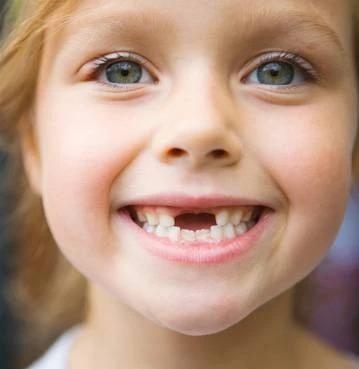
FAQ: Why are baby teeth important? They’re going to fall out anyway, right?! Baby teeth, or primary teeth, are present in the child’s mouth from around 6 months until they are twelve. Baby teeth are critical for a child’s eating, smiling, speaking, and facial development. With good brushing and flossing, and with a reasonable diet consisting of mostly healthy foods, cavities can be avoided. If a tooth gets a cavity, typically it can be fixed with a white filling or a cap, and be saved. We always try to save teeth if at all possible. Unfortunately, baby teeth that get infected or have lost too much tooth structure need to be removed. This can cause many problems in the child’s developing mouth. If a back tooth or canine tooth is lost early, the other teeth around it will shift and fill that space. When this happens, there is not enough room for the permanent tooth to erupt and braces are typically needed to push the teeth back to their normal positions and gain the space once again. Luckily, if a front tooth is lost too early from trauma (the tooth gets knocked out) or from infection, there typically aren’t too many problems (except a toothless grin for photographs!). Studies have shown that missing front baby teeth do not typically affect speech or eating habits. When these teeth are lost too early, it can delay the eruption of the permanent tooth a year or two, which concerns many parents. If a baby tooth has to be removed early, we often recommend a spacer or space maintainer to keep the other teeth from shifting and filling the space that is needed for the permanent tooth to erupt. Sometimes if the permanent tooth will erupt soon, a spacer is not needed. If your child needs a tooth extracted, always be sure to ask if a spacer is needed to avoid the need for braces, or at least the need for more complicated braces later. If you have any questions about this post, or would like to schedule an appointment, please contact Dr. Baxter and the team at 205-419-7444.
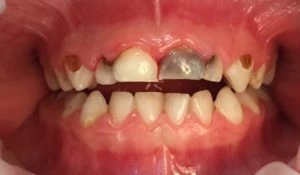
The two ways that your child can get cavities are by not brushing (or flossing) his or her teeth, and by consuming too much sugar. Sugar can be in many forms, either liquid (milk, juice, or other sugary drinks) or solid (sweets and candy). Typically the liquid form of sugar can cause cavities quicker in children. Often when we see decay in a young child, they have had access to a bottle or sippy cup whenever they want it, or they drink from a bottle at nighttime with milk in it. Milk contains a natural sugar, lactose, which can be changed into an acid by the bacteria in the mouth and cause cavities when it sits on the child’s teeth. Juice, chocolate milk, sweet tea, or even Coca Cola are often given to children to drink. These all contain similar amounts of sugar and can cause tooth decay extremely rapidly. (Side note: Juice contains more sugar than Coca Cola!) If this process of changing sugars from the diet into lactic acid by the bacteria in the mouth happens often over time, the enamel will begin to weaken. The rate of cavity formation is based on the frequency of sugar intake. If the tooth is exposed to sugar (and therefore acid) more frequently, the enamel will dissolve faster, and cavities will form rapidly. So the best time for a child to drink a beverage containing sugar (even milk) is just with meals, rather than throughout the day. At night, if a child has milk or juice, it stays on the teeth for a very long time, and there is not much saliva produced at night to wash it off the teeth. Therefore, children should only drink water at night and should drink water throughout the day as much as possible.
The frequency of sugar consumed is only one piece of the puzzle. We also need to have high amounts of bacteria that can convert the sugar to acid. The main way we can reduce the bacteria in the mouth is by brushing and flossing. It’s important to start brushing a child’s teeth as soon as they enter the mouth, typically around six months. You can begin using a fluoride toothpaste (which makes the enamel stronger and harder to dissolve) as soon as you start brushing by using a smear of toothpaste. As soon as teeth begin to touch, most often where the back molars meet or where the two front teeth meet, it’s a good idea to start flossing. You can use little flossers with handles, and wipe the piece of floss off after going between each set of teeth.
The final piece of the puzzle is the part that you cannot really change. Your child will get bacteria in their mouth that can cause cavities (typically from mom, but sometimes from dad or another relative). So it’s important for everyone around the baby to have excellent oral health to minimize the bacteria transferred when you kiss your baby, they try your food, or any other activities where saliva may be transferred from parent to baby. However, you cannot change the genetics that influence the hardness of the teeth. Some people’s teeth are a little softer (and more likely to get cavities), and we don’t yet know why. BUT the important thing to realize is that if you or your spouse have “bad teeth” or if you have a history of “soft teeth” in the family, be sure to be extra careful with sugar in the child’s diet and be extra careful to brush your child’s teeth very well, twice a day. Even if the child has “softer teeth”, he or she can still be cavity free with good brushing and limiting sugar intake.
If you have any other questions about cavities in young children, we would be happy to answer them for you. Call our office at 205-419-7444.


 Flossing is a key part of maintaining a healthy mouth and a beautiful smile. But let’s be honest, flossing is not very high on the to-do list. Sometimes, it takes so much effort to get your child’s teeth brushed at night, that adding flossing would be just too much. So here’s a tip: Only floss your child’s teeth that are touching.