(205) 419-7444 2490 Pelham Pkwy, Pelham, AL 35124

COVID-19 UPDATE 4/30/20

We will be open for regular dental work, cleanings, fillings, and more starting Friday, May 1! We have our team members here today answering your calls to schedule an appointment or reschedule as needed. We’re excited to be back, but we ask you to please read this letter which details the steps we are taking, and need our patients to help with, for a safe and healthy dental visit. Thanks so much!! – Dr. Baxter
____________________________________

We hope this letter finds you and your family in good health. Our community has been through a lot over the last few months, and as we look toward resuming your dental visits, we want to update you on what to expect at your visit for the current time, until restrictions lift. Our top commitment is the safety of our patients, families, and team.

Infection control has always been a top priority for our practice. Our office follows infection control recommendations made by the American Dental Association (ADA), the U.S. Centers for Disease Control and Prevention (CDC), and the Occupational Safety and Health Administration (OSHA).

To help with the efficiency and safety of your child’s appointment, please observe the following recommendations from the Alabama Dental Board:

-Please stay home and cancel your child’s appointment if anyone in the house has a fever, flu-like symptoms, GI symptoms, a loss of taste or smell, or has been around anyone with COVID-19. We are required to have you sign a screening form when you arrive. The pen and sheet or iPad will be disinfected between patients.

– Please use the restroom and have your child use the restroom before coming to the office. We have a bathroom available if you need it, and it will be disinfected between uses.

-When you arrive, please call us at 205-419-7444 to let us know you have arrived.

– Per the board rules, only children with a scheduled appointment and one parent are allowed in the office (this is not our rule as we typically like to welcome everyone, but for now this is necessary). Thank you for understanding. If other children without appointments must accompany you to the visit, the child having the appointment can come in, and the parent and other children without appointments can wait in the car. If the other child is due for a visit, we are happy to clean their teeth too and make them an appointment at the same time, but please reach out to us ahead of time if possible.

– Parents and older children are encouraged to wear a face covering or mask if possible.

What you can expect from us:

– We will come to your car to take a temperature and ask the screening questions, and then accompany you to your treatment room.

– We will provide hand sanitizer as you enter.

– We will thoroughly disinfect all treatment areas, and observe social distancing rules.

– We will wear N95 masks and face shields to limit the chance of the spread of disease.

– We will use DryShield and high volume suction that we always use during filling appointments to minimize aerosols.

– The waiting room will not offer coffee, magazines, toys, or iPads for the time being to minimize surfaces to be cleaned. The parent may choose to wait in the waiting room (with social distancing) or vehicle during the child’s appointment.

– We will still find a way to make the visit fun and enjoyable for your children! 

We look forward to seeing you again and are happy to answer any questions you may have about the steps we take to keep you, and every patient, safe in our practice. To make or reschedule an appointment, please call our office at 205-419-7444.

Thank you for being our patient. We value your trust and loyalty, and we look forward to welcoming back our patients, neighbors, and friends.

Sincerely,

Drs. Baxter, Jones, Adams and SPD Team
NO Juice for Infants… (and other kids for that matter)!

You have probably seen the articles on social media about the new juice guidelines put out by the American Academy of Pediatrics. We wanted to add our voice of support to all the press and tell you a little bit more about why this is such an important change to the guidelines!

Ask any pediatric dentist and they will tell you that diet is a huge factor in whether or not a child will likely develop decay. If a child is frequently exposed to sugary or starchy foods or drinks, they are at much higher risk for dental decay. Fruit juice is particularly deceptive because it appears to be something healthy, but in reality all the “good stuff” that made the fruit beneficial – like fiber and phytonutrients – has been removed in the juicing process, so all you’re left with is sugar water. Surprisingly, 100% no-sugar-added apple juice (even if it’s organic) has MORE sugar than Coke (45g of sugar for 12oz vs. 39g of sugar for Coke).

Frequency of exposure is the other big factor in cavity formation related to diet. If the juice is presented in a sippy cup that the child has constant access to throughout the day, the sugary liquid is all the more damaging.  So even for children over age one for whom juice is not expressly forbidden by the guidelines, it’s still good to give it only sparingly (no more than ½ a cup or 4oz a day), served in one sitting with a meal, and with water after. Juice should be thought of in much the same way as a piece of cake or soda – it’s a special treat, offered sparingly, and is not a part of a healthy child’s routine daily diet. A clementine or an apple is a much better choice, whether we’re talking about teeth or general health!

So try to eliminate juice altogether from the diet if possible, or decrease the quanitity and frequency significantly to avoid cavities. If your child has already had cavities, then it’s even more important to “just say no” to juice!


More than “Just Baby Teeth”

Many parents might find themselves wondering why we make all this fuss about baby teeth. They’re going to fall out anyway, right? It is true that the baby teeth will fall out eventually. The trouble is, some of those teeth are still in the mouth for a long time. Did you know that on average, the final baby teeth to fall out (the upper canines) aren’t lost until age 12!   FullSizeRender

If a tooth has an infection, like cavities, or has experienced trauma, it is often recommended to treat the infection or condition in order to restore the tooth to optimal function and esthetics. This is true of a baby tooth or a permanent tooth. There are many reasons to treat baby teeth just like we would permanent teeth. Below we’ll discuss just a few.

First, baby teeth are important for a child’s self-esteem. Children are sensitive to the appearance of their smiles just like adults are – we all want to have beautiful teeth to show the world. Second, baby teeth are important for functions like speech and chewing. If any of the teeth are broken down or causing pain, chewing and speaking can be impacted and lead to negative developmental consequences. Thirdly, baby teeth are important to the overall growth and development process of the jaw. Baby teeth act as space-holders for the permanent teeth that will eventually take their place, so if a baby tooth is lost early due to disease or trauma, permanent tooth positioning and jaw development can be negatively impacted as well. Last but certainly not least, it is important to keep your child’s baby teeth healthy and functional so that your child is comfortable and pain-free. Many children with dental disease have trouble concentrating in school and they miss more school days than children with healthy teeth, so routine checkups and following through with treatment recommendations are vital to making sure your child’s teeth are healthy and your child is able to go through their day to day life comfortably.

We hope this short post has helped you see the importance of your child’s baby teeth! Be sure to brush them twice a day with fluoridated toothpaste, floss in-between them daily, limit sugar in the diet (juice and fruit snacks included!), and visit your dentist for checkups every 6 months!

This post was written by Dr. Taylor McFarland, our board-certified pediatric dentist. If you have any questions about baby teeth or any other dental topics, please call our office at 205-419-7444 or send us an email at info@shelbypediatric.com.

We’re excited to announce Dr. Taylor McFarland is joining our practice!

We’re super excited to announce that Dr. Taylor McFarland is joining our practice! She is a Board-Certified Pediatric Dentist who shares our treatment philosophy, is very sweet with the little ones, and is passionate about children’s oral health. She graduated at the top of her dental school class at UNC, and completed her residency at Baylor in Texas. She will be with us starting officially after Labor Day. Make sure to welcome her next time you’re at the office! She’s also fluent in Spanish! Here’s her Bio below:

________________________________________

Dr. McFarland is passionate about helping children and their families feel valued, loved, and cared for when they visit the dentist. She was born in Austin, Texas, but as the eldest child of an Air Force officer she spent her young life moving every few years. She has lived in Alaska, England, and many places in between. After graduating from high school in Virginia, she decided to add North Carolina to the list of states she called home. She attended Duke University (Go Devils!) where she met her husband, Andrew, and graduated magna cum laude with a degree in biology.

The3 McFarland001 60

 
Dr. McFarland decided to stay in North Carolina for her Doctorate of Dental Surgery degree at the University of North Carolina in Chapel Hill (the weight of this decision will not be lost on college basketball fans). She graduated from UNC with distinction and was inducted into Omicron Kappa Upsilon, the national dental honor society. She then returned to Texas with her husband in order to complete her residency in pediatric dentistry at the Texas A&M Baylor College of Dentistry in Dallas, where she earned both a Master’s of Oral Biology and a certificate in Pediatric Dentistry. Her training encompassed preventive and restorative dentistry, dental emergencies and trauma, growth and development, dental sedation, hospital dentistry under general anesthesia, and care for the special needs child. Dr. McFarland is a Board Certified pediatric dentist and a Diplomate of the American Board of Pediatric Dentistry, member of the American Academy of Pediatric Dentistry, the Alabama Dental Association, and the American Dental Association.
 
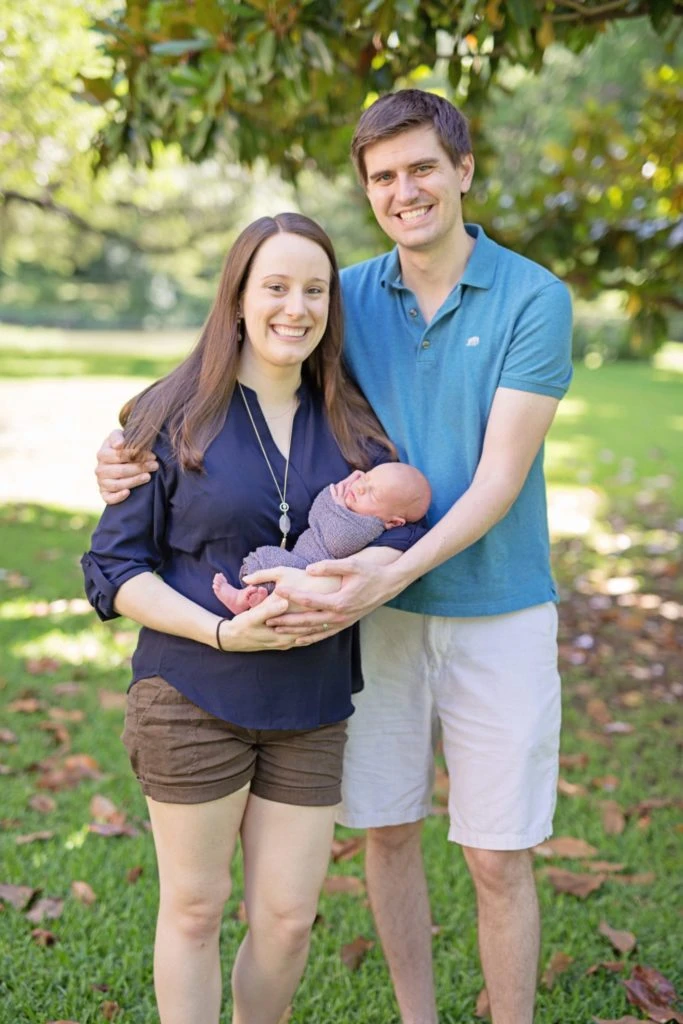
Dr. McFarland and her husband moved to Birmingham in June of 2016 for her husband’s job. In May just before the big move they welcomed their precious son, Wes, into the world. They enjoy walking their three dogs together and traveling to visit their extended family in Texas and Virginia. In her spare time, Dr. McFarland loves to read, play board games, and try new delicious foods. Dr. McFarland and her husband are getting plugged in to a local church and hope to see you out and about in Birmingham!

Why did we get a new laser?

Why did we get a new laser? We had been using the iLase dental laser from Biolase. It’s a pen-like device that belongs to a subset

of lasers called “diode” lasers. How it works is the tip is “initiated” by something like cork or blue paper before each use, which then focuses the laser energy at the tip of the laser during use and makes it very hot. The laser is then used to remove the tissue by essentially searing it off or cauterizing it. The laser has beneficial properties for tissues like “photobiomodulation” and other fancy terms, but for the most part, it’s a very hot tip. This style of laser (diode) is the most commonly used laser in dentistry, and it works well for many soft tissue procedures, but it takes a long time.

However, in the quest for the best all-around laser for our patients, I came across CO2, Er:YAG, and Er,Cr:YSGG. We went with CO2 because it acts differently than the other lasers. A diode laser is a white-hot tip that sears the tissue, whereas the Erbium and CO2 lasers work by vaporizing the water in the cells (which means much less of the “burning” smell that was present with the diode laser). Weighing all the options, I felt that the laser with the least intraoperative and postoperative pain, quickest procedure time, minimal to no bleeding, and fastest healing was the CO2 laser. Ours is sold by LightScalpel.

The procedure with the LightScalpel is about 10-20 seconds for the upper lip and about 10-20 seconds for the tongue. With the diode, sometimes it would take 60-120 seconds for the upper lip and 60 seconds for the tongue. When performing these procedures, we allow the parents back (or they can choose to remain in the consult room), and many times that is the longest 5 minutes of a parent’s life! If we can decrease the time it takes for the procedure, the better it is for the clinical team, the parent, and of course, the child.

So what does this mean in English? This means less discomfort for the baby or child with a lip or tongue tie during and after the procedure and a quicker procedure in the office.

For these reasons and more, although the CO2 laser is significantly more expensive, I believe it’s a great investment for our practice and especially for our littlest patients. We are one of the only offices in Alabama with a CO2 laser and the only office in Alabama using a CO2 laser for infants, children, and teens with tongue and lip ties. Please call our office if you have any questions about this post or would like to schedule an appointment. 205-419-7444.