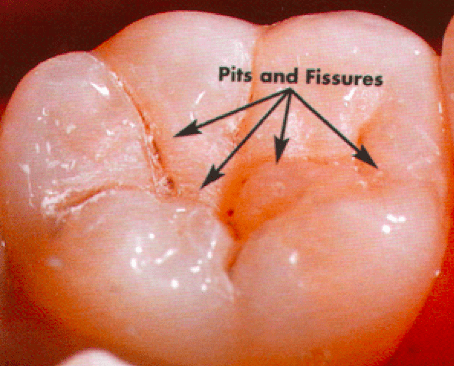
by Richard Baxter DMD, MS | Apr 20, 2015 | Cavities, Parent Questions, Treatment Options

kid teeth
FAQ: Why are baby teeth important? They’re going to fall out anyway, right?! Baby teeth, or primary teeth, are present in the child’s mouth from around 6 months until they are twelve. Baby teeth are critical for a child’s eating, smiling, speaking, and facial development. With good brushing and flossing, and with a reasonable diet consisting of mostly healthy foods, cavities can be avoided. If a tooth gets a cavity, typically it can be fixed with a white filling or a cap, and be saved. We always try to save teeth if at all possible. Unfortunately, baby teeth that get infected or have lost too much tooth structure need to be removed. This can cause many problems in the child’s developing mouth. If a back tooth or canine tooth is lost early, the other teeth around it will shift and fill that space. When this happens, there is not enough room for the permanent tooth to erupt and braces are typically needed to push the teeth back to their normal positions and gain the space once again. Luckily, if a front tooth is lost too early from trauma (the tooth gets knocked out) or from infection, there typically aren’t too many problems (except a toothless grin for photographs!). Studies have shown that missing front baby teeth do not typically affect speech or eating habits. When these teeth are lost too early, it can delay the eruption of the permanent tooth a year or two, which concerns many parents. If a baby tooth has to be removed early, we often recommend a spacer or space maintainer to keep the other teeth from shifting and filling the space that is needed for the permanent tooth to erupt. Sometimes if the permanent tooth will erupt soon, a spacer is not needed. If your child needs a tooth extracted, always be sure to ask if a spacer is needed to avoid the need for braces, or at least the need for more complicated braces later. If you have any questions about this post, or would like to schedule an appointment, please contact Dr. Baxter and the team at 205-419-7444.
by Richard Baxter DMD, MS | Apr 5, 2015 | Dental Health, Parent Questions, Treatment Options, Uncategorized
FAQ: What are sealants?
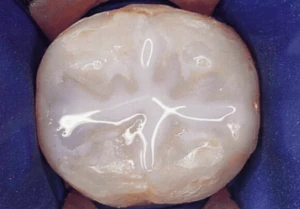
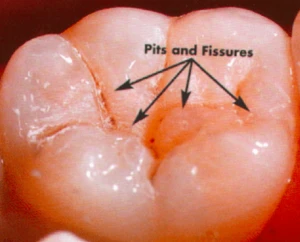
Sealants are a protective coating that can be placed in the deep grooves and pits of permanent molars (and sometimes other teeth). It is a white material that flows into the cleaned enamel, and when the blue light hits the sealant, it is cured and bonded to the tooth surface. Typically sealants can last 5-10 years, but sticky candy (jolly ranchers, laffy taffy, tootsie rolls, etc.) can pull them off, making them ineffective.
Sealants are important because around 42% of children aged 6-19 years have decay in their permanent teeth. Of those, 90% of cavities are found in the pits and fissures of the permanent molars. Sealants can reduce decay in children 86% at one year, 79% at two years, and up to 65% at nine years according to research from the ADA. Since we focus on prevention, we recommend sealants for all permanent molars, and we check the sealants at each visit to make sure they are doing their job of protecting the teeth. They are typically covered well by dental insurance, so they are a great way to protect your child’s teeth.
There was some concern in the past with BPA in dental sealants, and also with fluoride-releasing sealants. In our office, we use Clinpro from 3M ESPE, which contains no fluoride or BPA. Another factor unique to our office is the use of the Isolite system. Sealants placed with even slight moisture can fail quicker and will not protect the teeth as well as sealants placed in a dry field. The Isolite ensures that the child’s saliva is suctioned out during the entire procedure, and even reduces the humidity in the mouth to provide the best bonding and sealant retention possible. We can place the sealants in as little as 10 minutes on all four molars.
by Richard Baxter DMD, MS | Mar 24, 2015 | Dental Health, Parent Questions, Treatment Options, Uncategorized
FAQ: What are the different ways you can fix my child’s cavities?
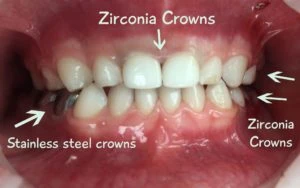
Actual picture of a patient treated by Dr. Baxter.
The treatment we use for children will depend on many different factors and can be quite complex. The two most important factors are the child’s age and their risk of future cavities. The treatment can range from simply monitoring or “watching” a cavity in a small child (or an older child who will lose the tooth soon) to having to do a silver cap in a child who has large decay on the tooth. The treatment of children’s teeth and more importantly, the child that those teeth are attached to, is much different than treatment for adults. We have to take into consideration the child’s psychological development, ability to cooperate in the chair, and their dietary and hygiene habits. In a nutshell, here are the different treatment options.
Monitor or watching a cavity: This is the most conservative route. There are many reasons we may recommend this option depending on the size and number of the cavities, the child’s age, the child’s brushing and flossing habits, and the child’s development.
White fillings: These plastic fillings are very common and are a good restoration to fix children’s teeth. We may recommend these to fix smaller cavities or to fix cavities in the grooves of the teeth. We don’t place any silver fillings (amalgams) because they contain mercury, which can be bad for your child and the environment.
Silver crowns or caps: These crowns are made of stainless steel (no mercury), and when the cavity grows bigger and has broken through to the sides of the tooth, or will require a baby tooth root canal (pulpotomy), then we will do a crown of some type. These silver crowns last longer than white fillings, and we know that the tooth is protected from getting any more cavities. If a child is younger, needs to have treatment in the surgery center, or has decay on many teeth (at a high risk), we may choose to use a crown to prevent further decay.
White crowns: This newer type of crown is made of zirconia and offer an esthetic option for teeth in the front or back of the mouth instead of silver crowns. These may be an option in a child that only needs a few crowns and is able to sit through the treatment (because they take longer to place than the silver ones). They are sometimes more costly than the silver crowns (depending on your insurance), but many parents like these because of their natural look.
Typically, treatment in the office is completed with nitrous oxide or laughing gas. This gas allows the child to relax, and within five minutes of turning it off, it is completely out of their system. Most children respond well to treatment in the office with laughing gas, and we can accomplish treatment that could otherwise not be done without it. It also reduces the gag reflex to increase your child’s comfort and produce the best dentistry possible.
If we are not able to complete treatment with nitrous oxide alone, then we may recommend oral sedation (for just a few teeth). If the child has more extensive dental needs, has had a fearful experience in the past, has special needs, or has lots of anxiety, we may recommend general anesthesia at Children’s Hospital with pediatric anesthesiologists.
With any decision to treat your child, we always weigh several options to individualize the choice to your child (because all children are different) and we strive to treat your child as we would our own. I only recommend treatment that I would do if it were my daughter in that situation, and when there is a choice between two good options, we let the parents know the options and let them decide.
If you have any questions about this post, or any others, please contact Dr. Baxter or the team at 205-419-7444.