by SPD Team | May 8, 2026 | Pediatric Dentistry, Uncategorized
A Parent’s Guide to What’s Normal-and When to Take Action
Thumb sucking is very common in babies and young children. In fact, it’s a natural way for kids to:
- Self-soothe
- Fall asleep
- Feel secure
But at some point, many parents start to wonder:
- “Is this going to affect their teeth?”
- “When should we stop it?”
- “Do we need help?”
At Shelby Pediatric Dentistry, we help parents understand what’s normal-and when it’s time to step in.
Is Thumb Sucking Normal?
Yes-especially in younger children.
Most kids:
- Suck their thumb as infants and toddlers
- Gradually stop on their own
In many cases, there is no need to worry early on
When Does Thumb Sucking Start Affecting Teeth?
The biggest factor is how long the habit continues.
Generally:
- Before age 3-4: Usually not a concern
- After age 4-5: May begin to affect teeth and jaw development
That’s when we start paying closer attention.
How Thumb Sucking Can Affect Teeth
If the habit continues as permanent teeth begin to come in, it can lead to:
Bite Changes
- Front teeth pushed forward
- Open bite (teeth don’t touch when closing)
Jaw Development Issues
- Narrow upper jaw
- Changes in how the teeth fit together
Speech or Swallowing Patterns
- Tongue positioning changes
- Possible speech concerns over time
These changes don’t happen overnight-but they can develop gradually
What Makes It More Likely to Cause Problems?
Not all thumb sucking is the same.
Risk depends on:
- Frequency (how often)
- Duration (how long each time)
- Intensity (gentle vs strong sucking)
A child who occasionally sucks their thumb briefly is very different from one who does it frequently and forcefully.
When Should Parents Be Concerned?
You may want to take action if your child:
- Is still thumb sucking after age 4-5
- Sucks their thumb frequently during the day
- Uses it to fall asleep every night
- Is starting to show changes in their bite
This is a great time to have your child evaluated during a Preventive Pediatric Dentistry visit
Could There Be an Underlying Cause?
In some cases, thumb sucking isn’t just a habit-it may be connected to how your child’s mouth and tongue function.
For example:
- A low tongue posture can make it harder for the tongue to rest naturally on the roof of the mouth
- This can sometimes be related to a tongue-tie (restricted tongue movement)
When the tongue isn’t resting against the palate as it should, a child may:
- Use their thumb to create that same soothing pressure
- Seek stimulation on the roof of the mouth
The thumb can essentially become a substitute for where the tongue should naturally rest
Can Treating a Tongue-Tie Help?
In some cases, yes-but it’s not a guarantee.
If a tongue-tie is present and treated:
- The tongue may be able to rest properly on the palate
- Natural stimulation of the palate can improve
- Some children may have less need for thumb sucking over time
However, thumb sucking is often both physical and behavioral, so results can vary We take a thoughtful, individualized approach when evaluating whether this could be a contributing factor.
Can Thumb Sucking Be Stopped Gently?
Yes-and most of the time, it doesn’t require punishment or pressure.
Helpful approaches include:
- Positive reinforcement
- Gentle reminders (not shaming)
- Identifying triggers (tired, bored, stressed)
- Offering alternatives (comfort items, routines)
The goal is to support-not force-the transition
What If My Child Is Struggling to Stop?
Some children need a little extra help-and that’s okay.
We can:
- Monitor how the habit is affecting teeth
- Evaluate for contributing factors like tongue posture
- Offer guidance tailored to your child
- Recommend simple strategies or appliances if needed
In many cases, early guidance can prevent the need for more involved treatment later.
Why Early Awareness Matters
Thumb sucking doesn’t always lead to problems-but when it does, it’s usually because it continued too long.
Early evaluation helps:
- Catch changes before they worsen
- Protect proper tooth and jaw development
- Avoid more complex orthodontic issues later
What Parents Are Saying
Families at Shelby Pediatric Dentistry appreciate having clear guidance:
“They explained everything in a way that made me feel confident about what to do next.”
“The team was so patient and helpful with my child.”
A Simple Next Step
If your child still sucks their thumb and you’re unsure what to do, we can help.
A SIMPLE NEXT STEP
Still Concerned About Thumb Sucking and Your Child’s Teeth?
We’ll take a look, answer your questions, and guide you-without pressure.
Serving Families Across Our Community
We help families in:
- Pelham
- Birmingham
- Hoover
- Alabaster
If you’re searching for guidance on thumb sucking and teeth, you’re in the right place.
Final Thought
Thumb sucking is normal-but timing matters. And sometimes, understanding the why behind the habit can make all the difference in helping your child move past it.
by SPD Team | Apr 30, 2026 | Cavities, Pediatric Dentistry
A Simple, Proven Way to Help Prevent Cavities
If you’ve been told your child might need dental sealants, you may be wondering:
- “Are they really necessary?”
- “Are sealants safe?”
- “Do they actually prevent cavities?”
The short answer: yes-dental sealants are one of the easiest and most effective ways to protect your child’s teeth.
At Shelby Pediatric Dentistry, we recommend sealants for many children because they help stop cavities before they ever start.
What Are Dental Sealants?
Dental sealants are thin, protective coatings placed on the back teeth (molars)-where cavities most often form.
These teeth have deep grooves that can trap:
Even with great brushing, these areas are hard for kids to clean.
Sealants “seal out” those cavity-causing bacteria.
Do Dental Sealants Really Work?
Yes-very well.
Sealants can reduce the risk of cavities in molars by up to 80%.
That’s why they are widely recommended as part of
Preventive Pediatric Dentistry
Are Dental Sealants Safe for Kids?
This is one of the most common questions parents ask.
At Shelby Pediatric Dentistry, we use:
- BPA-free dental sealants
- Materials that are safe and commonly used in pediatric dentistry
When Should Kids Get Dental Sealants?
Sealants are usually recommended when:
- First permanent molars come in (around age 6)
- Second molars come in (around age 12)
Some younger children may also benefit depending on their risk for cavities.
Why Sealants Matter (Especially for Kids)
Children are more likely to get cavities because:
- Brushing technique is still developing
- Back teeth are harder to clean
- Diets may include cavity-causing foods
Sealants add an extra layer of protection during these high-risk years.
What Is the Process Like?
The good news: it’s quick, easy, and completely painless.
- No drilling
- No numbing
- No discomfort
In many cases, we can place sealants during the same visit as your child’s cleaning and checkup, making it easy and convenient for families.
QUICK & PAINLESS PROCESS
No Drilling, No Numbing-Just Easy Protection for Your Child
Often Covered by Insurance
Another reason sealants are so popular with parents:
Most dental insurance plans cover sealants at 100% for children
That means there is often little to no out-of-pocket cost.
Many Kids Can Avoid Fillings Altogether
One of the biggest benefits of sealants:
They help prevent the need for future treatment like
kids dental fillings
Preventing cavities early means:
- Fewer dental visits for treatment
- Less stress for your child
- Lower long-term costs
What If My Child Is Nervous?
That’s very common.
We specialize in helping kids feel comfortable-even during simple procedures like sealants.
With:
- A calm, friendly team
- TVs on the ceiling
- A positive environment
Most kids do great without needing anything more than reassurance
If needed, you can also learn about comfort options here:
Sedation Dentistry for Kids
What Parents Are Saying
Families at Shelby Pediatric Dentistry often tell us how easy visits like this can be:
“My child forgot she was nervous… the appointment was easy, quick and fun.” – Jade W.
“Everyone was patient and kind… my kids felt comfortable and at ease.” – Breanna W.
Are Dental Sealants Worth It?
For most children, the answer is yes.
Sealants are:
- Safe
- Affordable
- Highly effective
- Quick and painless
And with insurance often covering them, they’re one of the easiest preventive steps you can take.
Serving Families Across Alabama
We provide preventive care like dental sealants for families in:
- Pelham
- Birmingham
- Hoover
- Alabaster
If you’re looking for guidance on dental sealants for children, we’re here to help.
A Simple Next Step
If your child has new molars-or you’re unsure if they need sealants-we can take a look and guide you.
A SIMPLE NEXT STEP
Not Sure If Your Child Needs Sealants?
Final Thought
Dental sealants are one of the simplest ways to protect your child’s smile.
And sometimes, the simplest solutions make the biggest difference.
by Richard Baxter DMD, MS | May 16, 2017 | Dental Health, Infant oral health, Pediatric Dentistry
Many parents might find themselves wondering why we make all this fuss about baby teeth. They’re going to fall out anyway, right? It is true that the baby teeth will fall out eventually. The trouble is, some of those teeth are still in the mouth for a long time. Did you know that on average, the final baby teeth to fall out (the upper canines) aren’t lost until age 12!

If a tooth has an infection, like cavities, or has experienced trauma, it is often recommended to treat the infection or condition in order to restore the tooth to optimal function and esthetics. This is true of a baby tooth or a permanent tooth. There are many reasons to treat baby teeth just like we would permanent teeth. Below we’ll discuss just a few.
First, baby teeth are important for a child’s self-esteem. Children are sensitive to the appearance of their smiles just like adults are – we all want to have beautiful teeth to show the world. Second, baby teeth are important for functions like speech and chewing. If any of the teeth are broken down or causing pain, chewing and speaking can be impacted and lead to negative developmental consequences. Thirdly, baby teeth are important to the overall growth and development process of the jaw. Baby teeth act as space-holders for the permanent teeth that will eventually take their place, so if a baby tooth is lost early due to disease or trauma, permanent tooth positioning and jaw development can be negatively impacted as well. Last but certainly not least, it is important to keep your child’s baby teeth healthy and functional so that your child is comfortable and pain-free. Many children with dental disease have trouble concentrating in school and they miss more school days than children with healthy teeth, so routine checkups and following through with treatment recommendations are vital to making sure your child’s teeth are healthy and your child is able to go through their day to day life comfortably.
We hope this short post has helped you see the importance of your child’s baby teeth! Be sure to brush them twice a day with fluoridated toothpaste, floss in-between them daily, limit sugar in the diet (juice and fruit snacks included!), and visit your dentist for checkups every 6 months!
This post was written by Dr. Taylor McFarland, our board-certified pediatric dentist. If you have any questions about baby teeth or any other dental topics, please call our office at 205-419-7444 or send us an email at info@shelbypediatric.com.
by Richard Baxter DMD, MS | Jul 2, 2016 | Infant oral health, Pediatric Dentistry, Uncategorized
Why did we get a new laser? We had been using the iLase dental laser from Biolase. It’s a pen-like device that belongs to a subset
of lasers called “diode” lasers. How it works is the tip is “initiated” by something like cork or blue paper before each use, which then focuses the laser energy at the tip of the laser during use and makes it very hot. The laser is then used to remove the tissue by essentially searing it off or cauterizing it. The laser has beneficial properties for tissues like “photobiomodulation” and other fancy terms, but for the most part, it’s a very hot tip. This style of laser (diode) is the most commonly used laser in dentistry, and it works well for many soft tissue procedures, but it takes a long time.
However, in the quest for the best all-around laser for our patients, I came across CO2, Er:YAG, and Er,Cr:YSGG. We went with CO2 because it acts differently than the other lasers. A diode laser is a white-hot tip that sears the tissue, whereas the Erbium and CO2 lasers work by vaporizing the water in the cells (which means much less of the “burning” smell that was present with the diode laser). Weighing all the options, I felt that the laser with the least intraoperative and postoperative pain, quickest procedure time, minimal to no bleeding, and fastest healing was the CO2 laser. Ours is sold by LightScalpel.
The procedure with the LightScalpel is about 10-20 seconds for the upper lip and about 10-20 seconds for the tongue. With the diode, sometimes it would take 60-120 seconds for the upper lip and 60 seconds for the tongue. When performing these procedures, we allow the parents back (or they can choose to remain in the consult room), and many times that is the longest 5 minutes of a parent’s life! If we can decrease the time it takes for the procedure, the better it is for the clinical team, the parent, and of course, the child.
So what does this mean in English? This means less discomfort for the baby or child with a lip or tongue tie during and after the procedure and a quicker procedure in the office.
For these reasons and more, although the CO2 laser is significantly more expensive, I believe it’s a great investment for our practice and especially for our littlest patients. We are one of the only offices in Alabama with a CO2 laser and the only office in Alabama using a CO2 laser for infants, children, and teens with tongue and lip ties. Please call our office if you have any questions about this post or would like to schedule an appointment. 205-419-7444.
by Richard Baxter DMD, MS | Jul 24, 2015 | Parent Questions, Pediatric Dentistry, Uncategorized
anxious child
A parent asked this question on our Facebook page. If anyone has any questions or suggestions for future blog posts, please post them on our page or in the comments section, and I will be happy to answer them!
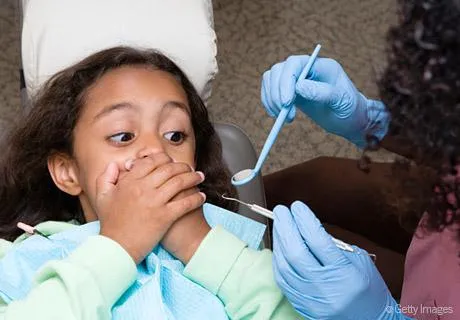
Typically a child who is fearful of the dentist will have had a difficult situation at another dentist’s office or at a pediatrician’s office and is scared of anyone dressed in scrubs or medical clothing. Sometimes the fear is transmitted from a parent or relative who had a bad experience at the dentist. These relatives (often siblings) will say things to the child like “they’re going to pull out a huge needle and jab it into your gums!” Clearly this is the wrong message to send to a child who has never been before or one who is about to get some fillings done. Parents can instead try to prepare their child in a positive way while avoiding the scary things. Say things like “we like the dentist because he / she keeps your teeth healthy” or “you’re going to have a great time because you can watch Frozen while they sing songs to you and fix your teeth!” (Which is true at our office!) You can also show your child our virtual tour on our website so they can see the office before arriving. It’s generally helpful to be vague and allow us to prepare your child for the specific procedure at our office. We allow them to touch the instruments, feel the water and the air, and hear the noises in a non-threatening way while explaining what we are going to do at an age-appropriate level.
Please do not mention anything about “shots”, “drills”, “pulling or yanking teeth” or anything “hurting.” Most of the time (probably 90%), the kids don’t even know they get a teeny tiny injection because we have lots of techniques to help them through the appointment. Many times we take out their sick tooth, and they don’t even know! So prepare them in a way that portrays dentists and dentistry in a positive light, and let us work through the appointment. Although a lot of parents have had difficult experiences at the dentist themselves, and it can be hard to not tell your child about it, avoid discussing your anxiety or past bad experiences. Children can sense a parent’s anxiety. Parents are welcome to accompany children for any visit, but if the parent feels more comfortable waiting in the lobby, that is totally fine too. Also avoid discussing details of a prior difficult experience the child has had at another office. We would be happy to discuss any prior difficulties that you think we need to know about in an area away from the child.
If you have any questions about this post or any others, please call our office at 205-419-7444.
Richard Baxter, DMD, MS
by Richard Baxter DMD, MS | Jul 9, 2015 | Pediatric Dentistry
“Dentistry with a Mission” 
An article written about us when we first opened used the phrase “Dentistry with a Mission,” and it stuck. Our full mission statement is to “provide exceptional, individualized oral healthcare for infants, children, adolescents, and patients with special needs in a fun and compassionate environment. We partner with parents and focus on prevention and early detection of dental diseases in order to help our patients establish a lifetime of healthy habits. We believe every child is a blessing, and it is our privilege to serve them.”
We desire to bless those around us and also those around the world through dentistry. After visiting third world countries, and through the teaching at our church, The Church at Brook Hills, our eyes have been opened to the needs around the world and in our own community. For example, in a certain area of Ghana, there are 3 million people and 1 dentist. That’s like having two dentists for the whole state of Alabama! It is difficult for us to understand the kind of need that exists in other parts of the world. Through mPower Approach, my wife and I went to Myanmar and trained pastors to extract teeth so that the impact from our 10 day trip would continue long after we left. It’s like teaching a man to fish instead of giving him a fish. These pastors then go and share God’s love with those hurting around them and also provide a much needed service. By God’s grace, we hope to go on many more trips in the future, and I went to Ghana in January of 2016.
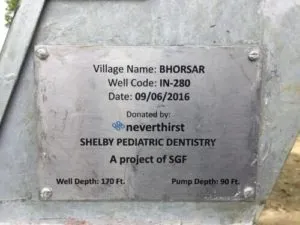
In addition to going on trips, we hope to use the resources that God has entrusted to us in the practice to bless others. One way we have done this is by partnering with NeverThirst who provides clean water to those without access to drinking water and brings Living Water by partnering with churches in these areas. Locally, we have supported the North Shelby Library, local schools, and students in inner-city Birmingham.
We thank you for your support of our mission. It truly is our privilege to serve you!