by Richard Baxter DMD, MS | Oct 29, 2015 | Cavities, Parent Questions

halloween candy buy back
This is going to sound crazy, but eating Halloween candy on Halloween is not dangerous for your teeth. The bigger concern is when the candy is eaten frequently throughout the year and becomes a habit. For example, it’s much better for your child’s teeth to allow them to eat whatever candy they want on Halloween night, and then get rid of the rest. For example, if they receive 100 pieces of candy, and you give them one piece a day, it may create a habit of wanting candy every day – which is much more likely to cause cavities. So the best thing for parents to do with Halloween candy is to let their child enjoy it on Halloween night, and get rid of the rest however you choose to do so.
Some offices offer a “Candy Buy-back” program. We do not have a candy buyback program at our office at this time. We know it can be helpful in some ways, but the main reason we don’t do it is because we don’t want to shift the problems associated with candy from your kids to someone else. Unfortunately, the homeless commonly have many health problems and tooth decay already. According to one of our employees whose husband served several tours in Iraq, the troops have limited access to dental care and the candy is often melted by the time it gets to them. She suggested sending troops sunflower seeds, beef jerky, or energy bars instead. If we could find something useful to do with the candy, we may have one in the future, but for now, the best thing I can think to do with it is to have a massive bonfire! (Just kidding… well, sort of).
The best dental procedures to protect a child’s teeth from candy are dental sealants. These protective coatings “seal” the grooves so the candy does not get stuck deep in the molar where it is difficult to clean. However, sticky candy like Jolly Ranchers, Tootsie Rolls, caramels, and taffy can actually pull the sealants off, or pull off crowns or other dental work, so be careful!
Be safe when Trick or Treating, by all means enjoy the holiday, but don’t keep the candy around a long time!
If you have any other questions about this post, or about dental health in general, please leave a comment or call our office at 205-419-7444.
by Richard Baxter DMD, MS | Sep 17, 2015 | Infant oral health, Parent Questions

Knee2Knee
FAQ: How should I brush my child’s teeth?
Brushing your child’s teeth changes as they get older. It’s important to start brushing your child’s teeth at 6 months, or as soon as the first tooth comes in. Make sure to use just a smear of fluoride toothpaste for children age 6mo to 2 years, and a pea size amount for children age 2yrs and older. The easiest way to brush a toddler’s teeth who doesn’t want to cooperate is to lay them on the ground and place their head between your legs and their arms stretched out under your legs (see photo). This allows you to use one hand to lift the lips and the other to brush the teeth without the child interfering with the brushing process. Typically, uncooperative children will only require this position for a week or two, then will realize that brushing will happen regardless of their desire to brush or not. Hopefully, they will allow you to brush their teeth while they are sitting up normally. If you have two people, you can use the “knee-to-knee” position like we use in the office. Have the two caregivers face each other with one holding the child. Parent #1 will wrap the child’s legs around their waist and lean them back into the other parent’s lap. Parent #2 will then brush the teeth while parent #1 holds the child’s hands gently.
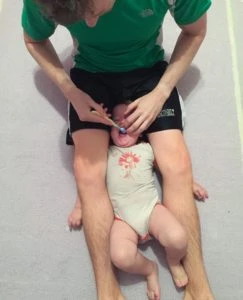
Brushing Position
Once your children get used to brushing daily, then you stand behind the child for an easier angle and brush their teeth in the bathroom. You can also try brushing their teeth while watching TV if they watch a show at night, or using some other distraction like an engaging toy. Once the child is age 2-9, you can allow them to try to brush their teeth first, and then the parent should brush afterward. Pay special attention to the gumline and the back teeth. Often, you will have to lift the child’s upper lip or lower the bottom lip to be able to brush effectively.
Once the child is around age 10 (some may be ready for independent brushing a little sooner or a little later) then allow the child to brush on their own, but it’s still important to at least check their teeth every few days to make sure they are brushing effectively. If the teeth look orange, or look dull (not shiny) or are “fuzzy”, then there is too much plaque on the teeth. You may need to help your child hit the problem areas and go back to checking the teeth daily.
Hopefully this information will help you and your child to brush well at all ages. If you have any questions, please ask one of our hygienists during your visit, ask Dr. Baxter, or call the office at 205-419-7444.
by Richard Baxter DMD, MS | Jul 24, 2015 | Parent Questions, Pediatric Dentistry, Uncategorized
anxious child
A parent asked this question on our Facebook page. If anyone has any questions or suggestions for future blog posts, please post them on our page or in the comments section, and I will be happy to answer them!
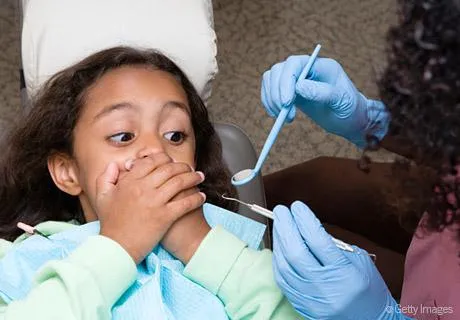
Typically a child who is fearful of the dentist will have had a difficult situation at another dentist’s office or at a pediatrician’s office and is scared of anyone dressed in scrubs or medical clothing. Sometimes the fear is transmitted from a parent or relative who had a bad experience at the dentist. These relatives (often siblings) will say things to the child like “they’re going to pull out a huge needle and jab it into your gums!” Clearly this is the wrong message to send to a child who has never been before or one who is about to get some fillings done. Parents can instead try to prepare their child in a positive way while avoiding the scary things. Say things like “we like the dentist because he / she keeps your teeth healthy” or “you’re going to have a great time because you can watch Frozen while they sing songs to you and fix your teeth!” (Which is true at our office!) You can also show your child our virtual tour on our website so they can see the office before arriving. It’s generally helpful to be vague and allow us to prepare your child for the specific procedure at our office. We allow them to touch the instruments, feel the water and the air, and hear the noises in a non-threatening way while explaining what we are going to do at an age-appropriate level.
Please do not mention anything about “shots”, “drills”, “pulling or yanking teeth” or anything “hurting.” Most of the time (probably 90%), the kids don’t even know they get a teeny tiny injection because we have lots of techniques to help them through the appointment. Many times we take out their sick tooth, and they don’t even know! So prepare them in a way that portrays dentists and dentistry in a positive light, and let us work through the appointment. Although a lot of parents have had difficult experiences at the dentist themselves, and it can be hard to not tell your child about it, avoid discussing your anxiety or past bad experiences. Children can sense a parent’s anxiety. Parents are welcome to accompany children for any visit, but if the parent feels more comfortable waiting in the lobby, that is totally fine too. Also avoid discussing details of a prior difficult experience the child has had at another office. We would be happy to discuss any prior difficulties that you think we need to know about in an area away from the child.
If you have any questions about this post or any others, please call our office at 205-419-7444.
Richard Baxter, DMD, MS
by Richard Baxter DMD, MS | Jun 13, 2015 | Cavities, Dental Health, Parent Questions
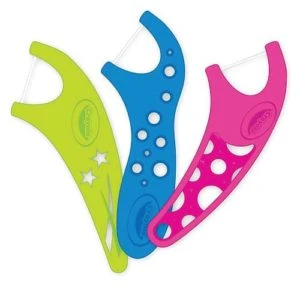 Flossing is a key part of maintaining a healthy mouth and a beautiful smile. But let’s be honest, flossing is not very high on the to-do list. Sometimes, it takes so much effort to get your child’s teeth brushed at night, that adding flossing would be just too much. So here’s a tip: Only floss your child’s teeth that are touching.
If your child’s teeth are not touching, you don’t have to floss. Make sure to brush really well, and brush along the gumline especially, but you only have to floss the teeth that are close together. Typically the front teeth, and the very back teeth are the only ones to touch. The most common place we see cavities in younger children (age 3-6) is between the baby molars. These four places often get food stuck between the teeth, and with four swipes of floss, you can prevent cavities easily. However, a lack of flossing, can cause these four places (or 8 teeth touching) to multiply to 8 cavities quickly! When flossing your child, make life easier on yourself and buy some of the little flossers (see photo above). Just be sure to wipe it between each tooth you floss or else you will just be spreading around the plaque.
To prevent those cavities between the teeth in the back molars, make sure to limit any sugary drinks, especially juice, Coke, Kool-Aid, sweet tea, and sports drinks. In fact, organic, no-sugar added apple juice (although healthier in general) has even more sugar than Coke! So we recommend water throughout the day and reserve white milk for meal times. The amount of time that the sugar is in contact with the teeth (less is best!) is the key to making sure your child does not get cavities.
As always, if you have any questions, or would like to schedule an appointment, please call 205-419-7444.
Dr. Baxter
by Richard Baxter DMD, MS | May 4, 2015 | Parent Questions, Pediatric Dentistry
FAQ: What should I do if my child knocks out his permanent tooth?
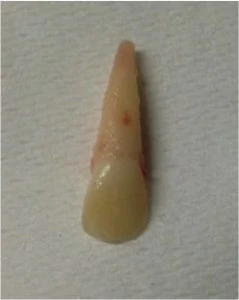
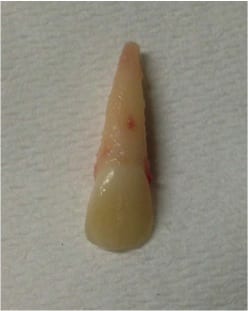
The best thing to do with a baby tooth that is knocked out is to put it under the child’s pillow for the tooth fairy. However, when a permanent tooth is knocked out, it is critical that action be taken immediately because whether the tooth survives is based on the time it takes to get the tooth back in the socket. A tooth that is knocked out from a sports injury, a fall, or any number of other ways needs to first be briefly rinsed with water for a few seconds to get any dirt off the tooth. The next step depends on your desire and ability to replace the tooth in the socket. The absolute best thing to do with a knocked out permanent tooth is to replace it in the socket right after quickly rinsing it with water. If this isn’t a possibility (the child lost consciousness) or you are not willing or able to do this, the next best thing to do is place the tooth in cold milk. Milk is the liquid that is most like the tooth’s natural environment and the cells on the root will be able to live for several hours in cold milk. Do NOT place the tooth in water, juice, Gatorade, or coke, because if the cells on the tooth root die, the tooth will not be able to heal once it is replaced in the socket.
The lifetime cost to replace a front tooth that is knocked out and does not survive is around $10,000 (for bridges, crowns, a dental implant, etc.). So if we can keep that tooth healthy, and it survives, not only will the child have a better smile, less dental procedures, and issues, but the parent will save a significant amount of money! This is why even if it seems gross to stick the tooth back in the socket, it really is the best treatment and gives the tooth the best chance of healing. Once the tooth is replaced in the socket (or if it is in cold milk) find a pediatric dentist or general dentist as soon as possible who can help you stabilize the tooth in the mouth. The tooth will usually require a root canal within 7-10 days after being knocked out, unless the tooth just recently erupted. The child will have to wear a splint on the teeth, which is typically made from fishing line and a white filling material. The splint will stay in place for around two weeks to allow the tooth to re-attach to the bone in the jaw.
If you have any questions about a permanent tooth getting knocked out, or would like to schedule an appointment, please call us at 205-419-7444.
by Richard Baxter DMD, MS | Apr 20, 2015 | Cavities, Parent Questions, Treatment Options
kid teeth
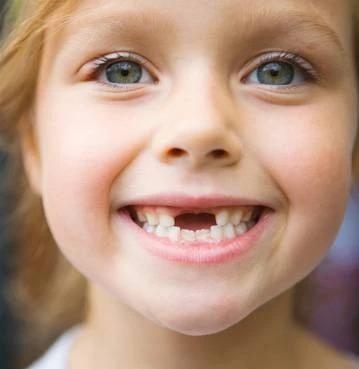
FAQ: Why are baby teeth important? They’re going to fall out anyway, right?! Baby teeth, or primary teeth, are present in the child’s mouth from around 6 months until they are twelve. Baby teeth are critical for a child’s eating, smiling, speaking, and facial development. With good brushing and flossing, and with a reasonable diet consisting of mostly healthy foods, cavities can be avoided. If a tooth gets a cavity, typically it can be fixed with a white filling or a cap, and be saved. We always try to save teeth if at all possible. Unfortunately, baby teeth that get infected or have lost too much tooth structure need to be removed. This can cause many problems in the child’s developing mouth. If a back tooth or canine tooth is lost early, the other teeth around it will shift and fill that space. When this happens, there is not enough room for the permanent tooth to erupt and braces are typically needed to push the teeth back to their normal positions and gain the space once again. Luckily, if a front tooth is lost too early from trauma (the tooth gets knocked out) or from infection, there typically aren’t too many problems (except a toothless grin for photographs!). Studies have shown that missing front baby teeth do not typically affect speech or eating habits. When these teeth are lost too early, it can delay the eruption of the permanent tooth a year or two, which concerns many parents. If a baby tooth has to be removed early, we often recommend a spacer or space maintainer to keep the other teeth from shifting and filling the space that is needed for the permanent tooth to erupt. Sometimes if the permanent tooth will erupt soon, a spacer is not needed. If your child needs a tooth extracted, always be sure to ask if a spacer is needed to avoid the need for braces, or at least the need for more complicated braces later. If you have any questions about this post, or would like to schedule an appointment, please contact Dr. Baxter and the team at 205-419-7444.