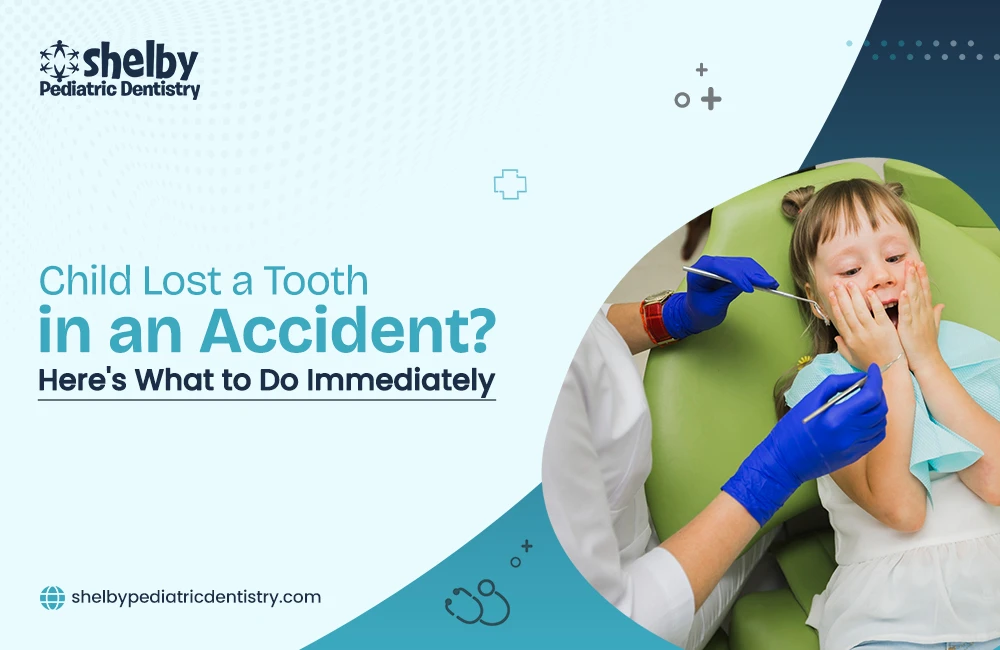
Few things are more alarming than seeing your child fall and knock out a tooth. Whether it happens on the playground, during a sporting event, or while playing at home, it’s easy to panic.
The good news is that knowing what to do in the first few minutes can make a big difference-especially if it’s a permanent tooth.
As a pediatric dentist, I’ve seen many dental injuries over the years. Staying calm and acting quickly gives your child the best chance for a successful outcome.
What Parents Should Do After a Child Loses a Tooth in an Accident
A knocked-out tooth is a dental emergency that requires immediate action.
Parents should first check for serious injuries, then determine whether the tooth is a baby tooth or a permanent tooth. If it’s a permanent tooth, handle it only by the crown, keep it moist in cold milk or a tooth preservation solution, and seek emergency pediatric dental care immediately. Baby teeth should never be replanted because doing so can damage the developing permanent tooth underneath. Quick treatment significantly improves the chances of saving a permanent tooth and preventing further complications.
Key Takeaways
- Check for serious injuries first: Call 911 or visit the emergency room if your child has heavy bleeding, a head injury, or loses consciousness.
- Determine the type of tooth: Knowing whether it’s a baby tooth or a permanent tooth is essential because treatment is different for each.
- Handle the tooth correctly: Hold it only by the crown and avoid touching or scrubbing the root.
- Keep a permanent tooth moist: Place it back into the socket if possible, or store it in cold milk or a tooth preservation solution until you reach the dentist.
- Do not reinsert a baby tooth: Replanting a baby tooth may damage the permanent tooth developing underneath.
- Avoid common mistakes: Don’t let the tooth dry out, wrap it in tissue, or delay emergency dental treatment.
- Seek immediate pediatric dental care: Prompt evaluation helps protect surrounding teeth, gums, and the jaw while improving the chances of saving a permanent tooth.
Is It a Baby Tooth or a Permanent Tooth?
The first question is whether the tooth is a baby tooth or a permanent tooth.
Children usually begin losing baby teeth around age six, although this varies from child to child. If your child is 7 years old or older, and it’s a top tooth, it could easily be a permanent tooth. You will also know if it’s a permanent tooth because they will have already lost the baby tooth, and the big tooth takes a while to grow in.
If you’re unsure which type of tooth it is, don’t worry. Give us a call, and we’ll help you determine the next steps. Our number is 205-419-7444. If it’s after hours, and a permanent tooth, you would want to go to the nearest Children’s Hospital, and most have a dental resident on call for just this situation.
What Should Parents Do Immediately?
If your child has a knocked-out tooth, follow these steps:
Stay Calm and Check for Other Injuries
Make sure your child hasn’t suffered a more serious injury. If there is heavy bleeding, a possible head injury, or loss of consciousness, seek emergency medical care immediately. Call 911 or go to Children’s Hospital.
Find the Tooth
If possible, locate the tooth right away.
Pick it up carefully by the chewing surface (the crown), not the root.
Touching the root can damage delicate cells that may be important if the tooth is a permanent tooth.
If It’s a Permanent Tooth
If it’s a permanent tooth, gently rinse it with clean water if it’s dirty. Avoid scrubbing the tooth or removing any attached tissue.
If possible, place the tooth back into the socket and have your child bite gently on clean gauze or a cloth.
If that isn’t possible, store the tooth in milk or a tooth preservation solution if one is available. Do not place the tooth in water. Milk or “save a tooth” is the best thing to use. The longer it is dry, the worse the prognosis. If you are unsure if it’s a permanent or baby tooth, just put it in milk, and the dentist can help you determine the next steps.
If It’s a Baby Tooth
A knocked-out baby tooth should not be placed back into the socket.
Reimplanting a baby tooth may damage the developing permanent tooth underneath.
Instead, keep the tooth if you can find it and contact your pediatric dentist for guidance. You can put it in milk just in case it’s permanent. But if there is a small root or no root, then it’s most likely a baby tooth that would have fallen out soon anyway.
If you’re unsure what to do, send us a message or call 205-419-7444 as soon as possible. We’ll help you determine the next steps.
Knocked-Out Baby Tooth? We’re Here to Help.
Get Expert Guidance for Your Child’s Dental Emergency
What Parents Should Avoid
When a tooth is knocked out, try not to:
- Touch the root of the tooth
- Scrub or clean the tooth aggressively
- Wrap the tooth in a dry tissue
- Delay seeking dental care
Time is especially important for permanent teeth. The cells need to remain wet (in milk or saliva) in order to survive.
When Should You Call an Emergency Pediatric Dentist?
A knocked-out permanent tooth should be evaluated immediately.
Even if you’re not sure whether the tooth is a baby tooth or permanent tooth, it’s best to contact a pediatric dentist right away.
Prompt treatment gives us the greatest opportunity to protect your child’s smile.
If your child experiences dental trauma, send us a message or call 205-419-7444. We’ll help you decide whether your child needs to be seen immediately. After hours, go to the nearest children’s urgent care or ER.
Can a Knocked-Out Tooth Be Saved?
Sometimes, yes.
Permanent Teeth
When a permanent tooth is treated quickly, it can often be successfully replanted.
The sooner treatment begins, the better the chances of saving the tooth.
Baby Teeth
Baby teeth are not replanted because doing so may interfere with the permanent tooth developing underneath.
We’ll evaluate the injury and make sure the surrounding teeth and tissues are healthy.
What Happens During the Appointment?
We’ll carefully examine your child’s mouth to look for:
- Injury to nearby teeth
- Damage to the gums
- Jaw injuries
- Whether X-rays are needed
- The best treatment plan moving forward
Every dental injury is different, so we’ll explain our findings and recommendations before beginning treatment whenever possible.
Frequently Asked Questions
1. What should I do if my child knocks out a tooth?
Stay calm, determine whether it’s a baby or permanent tooth, and contact a pediatric dentist as soon as possible.
2. Can a knocked-out baby tooth be put back in?
No. Baby teeth should generally not be replanted because they can damage the developing permanent tooth.
3. Is a knocked-out permanent tooth an emergency?
Yes. A permanent tooth should be evaluated immediately to give it the best chance of being saved.
4. How quickly should my child see a dentist?
As soon as possible. Time is one of the most important factors in treating a knocked-out permanent tooth.
5. Can a knocked-out tooth be saved?
Sometimes. Quick action greatly improves the chances of successful treatment for permanent teeth.
We’re Here When Dental Emergencies Happen
Dental injuries are stressful, but you don’t have to navigate them alone.
At Shelby Pediatric Dentistry, we provide compassionate emergency dental care for children and will help you understand exactly what your child needs after a dental injury.
If your child has knocked out a tooth or experienced another dental emergency, don’t wait. Send us a message or call 205-419-7444. We’ll help your family get the care you need as quickly as possible.
Dental Emergency? We’re Here to Help.